



Emmanuella Doussis is the UNESCO Chair on Climate Diplomacy and Professor of International Institutions at the University of Athens.
Climate change is no longer purely an environmental issue. It affects the economy, society, energy and international security, while creating new geopolitical balances and competition over critical resources, like water.
“Climate change is an economic problem, because it directly concerns states’ national economies. It is a social problem, because it affects societies. It is a political problem and it is also a geopolitical problem,” Professor of International Institutions and holder of the UNESCO Chair on Climate Diplomacy, Emmanuella Doussis, tells Euronews.
The climate crisis is reshaping geopolitical balances
Extreme heat and climate change are now directly linked to international competition for resources and strategic regions, Doussis explains.
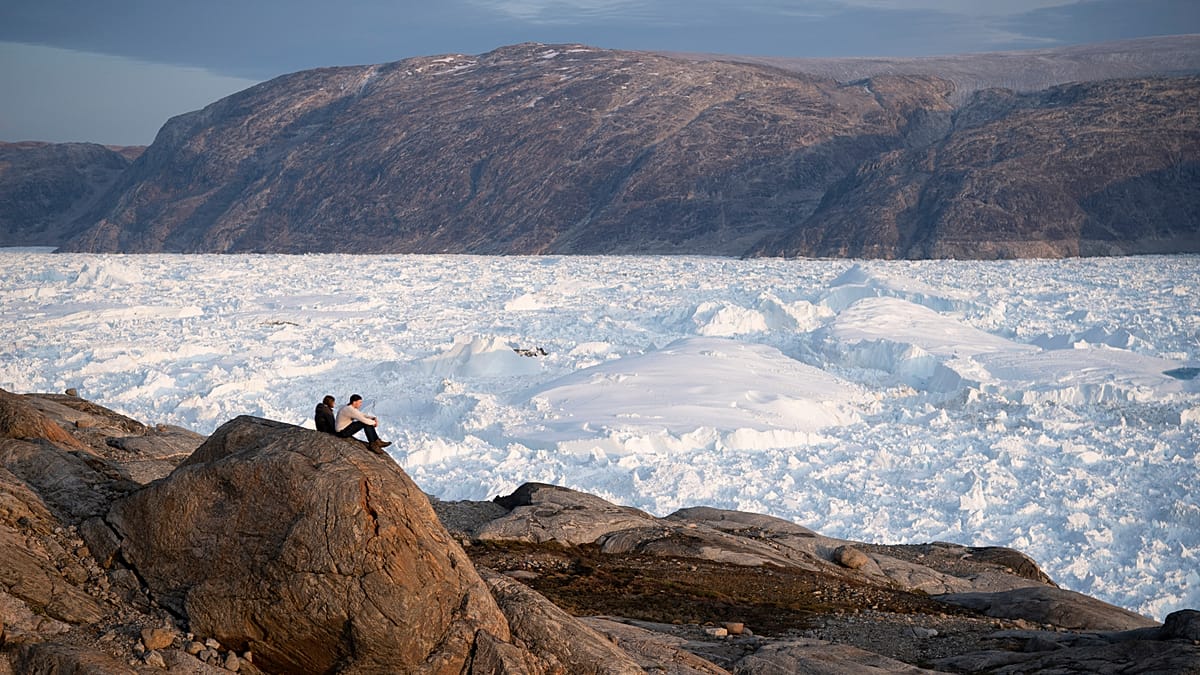
The meltingof Arctic ice, for example, is opening up new possibilities for trade routes, while at the same time competition is intensifying for raw materials that are vital for new technologies, such as lithium, cobalt and rare earths.
Water, and access to it, are acquiring ever-greater geopolitical significance, while climate change is also linked to food security and population movements.
“At this point we are seeing heightened competition in the search for new resources,” she explains, referring among other things to the Arctic, tensions over water and rivers, as well as population movements.
Moving away from fossil fuels is creating new dependencies
A central issue in tackling the climate crisis remains the gradual move away from fossil fuels. It is, however, a process with significant economic and geopolitical repercussions.
As Doussis explains, a genuine transition to clean forms of energy will not affect all states in the same way.
“The move away from fossil fuels will weaken certain states,” she says, explaining that countries which produce and export fossil fuels will have to restructure their economies and seek new sources of growth.
At the same time, she believes that states with substantial potential in renewable energy sources, such as solar, wind and geothermal, will gain ground, as will countries that possess raw materials essential for new technologies.
“Consequently, new dependencies and power relations will emerge,” she notes.
The role of international diplomacy
Addressing climate change depends to a large extent on international cooperation, which has been institutionalised through the United Nations Framework Convention on Climate Change and was strengthened by the Paris Agreement in 2015.
Nonetheless, Doussis points out the limitations of the current system. States submit national plans for reducing emissions and adapting to climate change, which are revised every five years, yet there are no substantial <a href="https://warsaw.today/eu-renews-russia-sanctions-but-removes-usmanov-at-frances-request/” title=”EU renews Russia sanctions but removes Usmanov at France's request”>sanctions in cases of non-implementation.
In a particularly challenging geopolitical environment, she believes that diplomacy could focus more on concrete actions and less on the constant setting of new targets.
In this context, she highlights the need for cooperation in specific fields, such as research and technology, as well as electricity interconnections, which can facilitate the faster roll-out of renewable energy sources.
Major emitters and different speeds
The role of the largest emitters is particularly important. China, the United States, India and the European Union are at the centre of international efforts, but with differing priorities and policies.
Doussis makes special reference to the United States where, as she notes, scepticism towards climate policy has grown and greater emphasis has been placed on fossil fuels.
At the same time, she notes that China has invested heavily in clean technologies, treating the green industry as one of the key sectors of the 21st century. However, it continues to invest in fossil fuels as well, which, she says, creates a complex picture of its role in the global energy transition.
Greece in a particularly vulnerable region
For Greece, the climate crisis takes on particular importance because of the country’s geographical position. The Mediterranean is regarded by the scientific communityas a region particularly vulnerable to the impacts of climate change.
Dousi notes that the country had made significant progress with the decision to phase out lignite and the just transition plans, but she believes that in recent years there has been greater emphasis on fossil fuels.
In her view, climate policy should not be treated as a set of isolated “green” measures, but as a broader political choice that affects the economy, energy and the entirety of public policies.
“Climate change is not always to blame”
According to Doussis, dealing with the consequences of the climate crisis is just as important as reducing emissions.
Recalling the major natural disasters of recent years in Greece, she stresses that climate change cannot be used as an alibi for long-standing weaknesses in planning and infrastructure.
“Climate change is not always to blame,” she notes, referring to chronic shortcomings, overly complex legislation and inadequate protection of vulnerable areas.
Water, food and population movements
The most worrying aspect of the climate crisis concerns its impact on access to basic goods
“We will face a very large, serious problem with food security. We will face problems with water,” she stresses.
Pressure on water resources may lead to new tensions between states, particularly in regions where rivers and river basins cross borders. As a characteristic example she cites the Nile and the tensions between Egypt and Ethiopia.
At the same time, climate change is expected to intensify population movements, creating yet another major challenge for international security and the management of migration flows.
The climate crisis is therefore evolving into a complex issue that goes beyond the boundaries of environmental policy. Energy, water, food security, raw materials and population movements are now all interconnected, making climate diplomacy an increasingly important field within international relations.
Source: www.euronews.com

1 Comment
Pingback: Angus Taylor pledges to repeal swathe of climate policies, saying ‘Australia has done its bit’ - Warsaw.Today