




The Capital One Venture X Rewards Credit Card and Capital One Venture X Business offer many of the same premium travel perks, but they’re designed for different types of cardholders.
For most travelers looking for a premium card for personal purchases, the Venture X is the better fit.
Meanwhile, the Venture X Business is geared toward business owners who want to earn rewards on business expenses and take advantage of additional expense management tools.
Both cards earn transferable Capital One miles and offer airport lounge access, an annual travel credit and anniversary bonus miles — all for the same $395 annual fee.
Here’s how the Venture X and Venture X Business compare.
Venture X vs. Venture X Business: At a glance
| Venture X | Venture X Business | |
|---|---|---|
| <strong>Annual fee</strong> | $395 | $395 |
| <strong>Welcome offer</strong> | Earn 75,000 bonus miles after spending $4,000 on purchases in the first three months from account opening. | Earn up to 300,000 bonus miles and a $1,000 travel credit: 150,000 bonus miles after spending $40,000 on purchases in the first four months from account opening, plus an additional 150,000 bonus miles and a $1,000 Capital One Business Travel credit (to use in the first cardholder year) after spending $120,000 total on purchases in the first four months from account opening. <p> </p> |
| <strong>Authorized user fee/Employee card fee</strong> | Authorized user fee: Free for up to four users (airport lounge access for authorized users requires an optional fee of $125 per year) | Employee card fee: Free for up to four users (airport lounge access for authorized users requires an optional fee of $125 per year) |
| <strong>Airport lounge access</strong> | Capital One Lounges and Landings, plus participating Priority Pass lounges | Capital One Lounges and Landings, plus participating Priority Pass lounges |
Quick picks by traveler type
| Best for | Card |
|---|---|
| Travelers who want premium perks with a more attainable welcome bonus | Venture X |
| Business owners with substantial upcoming expenses | Venture X Business |
| Business owners who want to separate personal and business spending | Venture X Business |
| Travelers who want lounge access and transferable miles for personal trips | Venture X |
Venture X vs. Venture X Business welcome offer
Both the Venture X and the Venture X Business come with valuable welcome bonuses, but the Venture X Business currently has a significantly higher earning potential.
New Venture X cardholders earn 75,000 bonus miles after spending $4,000 on purchases in the first three months from account opening. According to TPG’s November 2026 valuations, Capital One miles are worth 1.85 cents each, making this bonus worth $1,388.

New Venture X Business cardholders, on the other hand, can earn up to 300,000 bonus miles and a $1,000 Capital One Business Travel credit after meeting two spending thresholds:
- Earn 150,000 bonus miles after spending $40,000 on purchases in the first four months from account opening.
- Earn an additional 150,000 bonus miles and a $1,000 Capital One Business Travel credit (to use in the first cardholder year) after spending $120,000 total on purchases in the first four months from account opening.
TPG’s valuations place the full offer at up to $6,550, including the $1,000 travel credit.
That’s a substantial difference in value; however, the Venture X Business requires significantly more spending to earn the full bonus.
Even the first spending threshold of $40,000 is 10 times higher than the Venture X’s $4,000 requirement. And to earn the full business offer, you’ll need to spend an average of $30,000 per month over four months.
For business owners with substantial expenses, the higher bonus could be worthwhile. But for most personal travelers, the Venture X’s spending requirement is far more attainable.
Keep in mind that Capital One has application and welcome bonus eligibility restrictions, so it’s worth reviewing the terms before applying.
Winner: Venture X Business, for its significantly higher potential welcome bonus value — provided you can comfortably meet the spending requirements.
Venture X vs. Venture X Business: Benefits
The Venture X and Venture X Business share many of the same premium travel benefits, including annual travel credits, airport lounge access and anniversary bonus miles.
Here’s how their key perks compare:
| Benefit | Venture X | Venture X Business |
|---|---|---|
| <strong>Annual travel credit</strong> | <a target=”_blank” href=”https://thepointsguy.com/news/capital-one-venture-x-travel-credit/”>$300 through Capital One Travel</a> | $300 through Capital One Business Travel |
| <strong>Anniversary miles</strong> | 10,000 | 10,000 |
| <strong>Hotel collections</strong> | <a target=”_blank” href=”https://thepointsguy.com/hotel/capital-one-premier-collection/”>Premier Collection</a> and <a target=”_blank” href=”https://thepointsguy.com/news/capital-one-lifestyle-collection/”>Lifestyle Collection</a> | Premier Collection and Lifestyle Collection |
| <strong>Global Entry or TSA PreCheck credit</strong> | Up to $120 every four years | Up to $120 every four years |
| <strong>Cellphone protection</strong> | Yes, subject to terms | Yes, subject to terms |
| <strong>Hertz President’s Circle status</strong> | Yes, upon enrollment* | Yes, upon enrollment |
| <strong>Itemized spending reports</strong> | No | Yes |
| <strong>Payment requirement</strong> | Standard revolving credit card terms | Balance must be paid in full monthly (given it has no preset spending limit) |
*Upon enrollment, accessible through the Capital One website or mobile app, eligible cardholders will remain at that status level through the duration of the offer. Please note, enrolling through the normal Hertz Gold Plus Rewards enrollment process (e.g. at Hertz.com) will not automatically detect a cardholder as being eligible for the program and cardholders will not be automatically upgraded to the applicable status tier. Additional terms apply
Travel credits and anniversary miles
Both cards offer a $300 annual travel credit for bookings made through their respective Capital One travel portals.
For Venture X cardholders, that’s Capital One Travel. Venture X Business cardholders use Capital One Business Travel. The credit can help offset the cards’ $395 annual fees, particularly if you regularly book eligible travel through the portals.
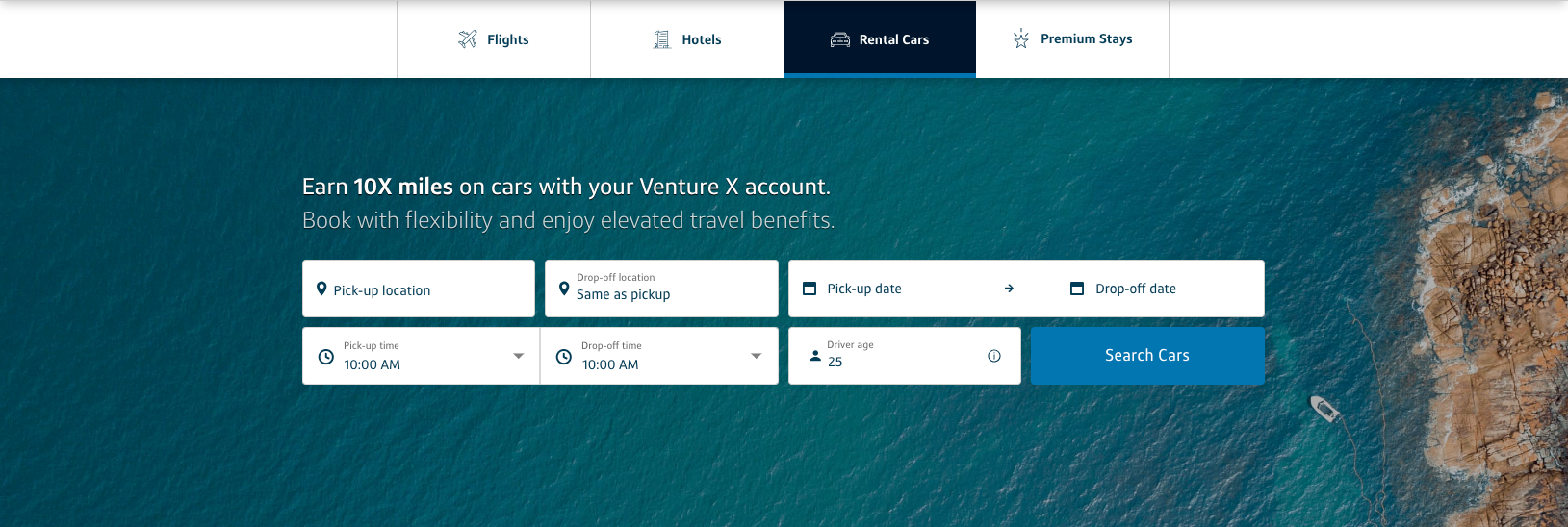
I recently used my Venture X’s $300 travel credit to book a stay at the DoubleTree by Hilton London Marble Arch. The stay would have cost $1,095.58, but the credit brought my total down to $795.58. I appreciate that the credit is applied at checkout, so I could see exactly how much I’d owe before completing my booking.
Both cards also provide 10,000 bonus miles on each account anniversary, worth $185
Combined, these two benefits offer up to $485 in annual travel value, potentially exceeding either card’s annual fee. However, that assumes you use the full travel credit and redeem your miles at TPG’s estimated value.
The key consideration is whether you’ll naturally use the travel credit for bookings you’d make anyway. If you prefer booking directly with airlines or hotels, you may find it harder to maximize this benefit.
Airport lounge access
Both cards provide access to Capital One’s network of airport lounges and Landings, as well as participating Priority Pass lounges.
Capital One operates lounges at several major airports, including Dallas Fort Worth International Airport (DFW), Denver International Airport (DEN) and John F. Kennedy International Airport (JFK).
This can be a valuable benefit if you frequently travel through airports with eligible lounges, particularly given that both cards carry a lower annual fee than some competing premium travel cards.

However, since both cards offer similar lounge benefits, this isn’t likely to be the deciding factor between them.
Keep in mind that guest access and additional cardholder privileges are subject to the cards’ current lounge access policies.
Business spending and payment requirements
The biggest differences between the two cards come down to how you manage your spending.
The Venture X Business offers itemized spending reports, which can make it easier to track purchases, organize expenses and separate business spending from personal spending.
It also has no preset spending limit, though that doesn’t mean unlimited spending power. And unlike the personal Venture X, the business card’s balance must be paid in full each month.
These features could be useful for business owners with significant monthly expenses, but the payment requirement is worth considering if you occasionally need to carry a balance.
For those primarily interested in earning rewards on personal purchases, the Venture X is the more straightforward option.
Winner: Tie.Both cards offer nearly identical premium travel benefits. The better choice comes down to whether you need a card for personal spending or business expenses.
How to earn and redeem rewards with Venture X vs. Venture X Business
Both cards earn Capital One miles at the same rates and offer access to the same redemption options and transfer partners.
Earning miles
| Venture X | Venture X Business |
|---|---|
| <ul> <li>10 miles per dollar on hotels and rental cars booked through Capital One Travel</li> <li>5 miles per dollar on flights and vacation rentals booked through Capital One Travel</li> <li>2 miles per dollar on all other purchases</li> </ul> |
<ul> <li>10 miles per dollar on hotels and rental cars booked through Capital One Business Travel</li> <li>5 miles per dollar on flights and vacation rentals booked through Capital One Business Travel</li> <li>2 miles per dollar on every other purchase</li> </ul> |
Since both cards earn at the same rates, neither has an advantage when it comes to earning miles.
Their biggest strength is the straightforward 2-mile-per-dollar earning rate on everyday purchases, making it easy to accumulate rewards without tracking bonus categories.
For example, spending $30,000 annually on either card would earn you 60,000 miles, worth $1,110
However, if you spend heavily in categories like dining, groceries or common business expenses, you may be better off with a card that offers elevated earnings in those areas.
Winner on earning: Tie. Both cards offer identical earning rates.
Redeeming miles
Both the Venture X and the Venture X Business earn transferable Capital One miles and have the same redemption options.
One of the simplest ways to redeem Capital One miles is to use them to cover eligible travel purchases at a rate of 1 cent per mile.
You can redeem your miles for:
- A statement credit: 1 cent per mile; to cover travel expenses and gift cards
- Amazon purchases: 0.8 cents per mile
- Cash back: 0.5 cents per mile
For example, you could redeem 30,000 miles to offset a $300 flight or hotel purchase.
TPG director of site strategy Carly Helfand has relied on this method before, redeeming 100,000 Capital One miles to cover a last-minute Airbnb booking.
While this is less than TPG’s valuation of Capital One miles at 1.85 cents apiece, it offers a straightforward way to use your rewards without searching for award availability.
Winner on redeeming: Tie. Both cards offer the same redemption options.
Transferring miles to travel partners
Both the Venture X and the Venture X Business earn miles that you can transfer to any of Capital One’s 15-plus hotel and airline partners, including Air Canada Aeroplan, Avianca LifeMiles and Wyndham Rewards.
TPG contributing editor Matt Moffitt likes to transfer his Capital One miles to Choice Privileges, which offers attractive award rates for hotel stays in expensive Nordic countries.

Transferring miles can be especially useful when you find an award flight or hotel stay that would otherwise cost significantly more in cash.
Since both cards earn the same transferable currency, neither has an advantage here.
Winner on transferring: Tie. Both cards provide access to the same transfer partners.
Can I have both the Venture X and Venture X Business?
Holding both cards may make sense if you want to separate personal and business expenses while earning Capital One miles.
Because the cards have similar earning rates and redemption options, you can use the same general strategy to maximize rewards on both accounts. However, there’s considerable overlap in their premium travel benefits.
Both charge a $395 annual fee and offer similar travel credits, lounge access and anniversary bonus miles.

That means holding both may not provide enough additional value to justify paying two annual fees, especially if you don’t have substantial business expenses.
You’ll also need to meet Capital One’s application and welcome bonus eligibility requirements. Having one card doesn’t automatically guarantee approval for the other.
If neither card fits your budget or travel habits, consider the Capital One Venture Rewards Credit Card, which has a lower annual fee, or the Capital One Savor Cash Rewards Credit Card, which earns bonus cash back in popular everyday spending categories.
Should I get the Venture X or the Venture X Business?
For most travelers, the Venture X is the better choice. It offers the same core travel benefits and earning rates as the Venture X Business, but with a much more manageable welcome bonus spending requirement.
The Venture X Business, meanwhile, is best suited for business owners who can comfortably meet its substantial spending requirements and want a premium travel card with expense management features.

Its current welcome offer is significantly more valuable than the personal card’s, but the $120,000 spending requirement to earn the full bonus makes it impractical for many businesses.
If you’re deciding between the two, consider whether you need a business credit card and how much you realistically spend each month. Those factors will likely matter more than the relatively minor differences in their travel perks.
Bottom line
The Venture X and Venture X Business share many of the same benefits, including annual travel credits, airport lounge access, anniversary bonus miles and straightforward earning rates.
For most personal travelers, the Venture X is the more practical option. But for business owners with substantial expenses, the Venture X Business offers a much larger welcome bonus and additional tools to manage spending.
Ultimately, the best choice depends on whether you need a personal or business card and how comfortably you can meet the spending requirements.
If you won’t regularly use the travel credits or other premium benefits, a lower-annual-fee card may be a better fit.
To learn more, read our full reviews of the Venture X and Venture X Business.
Learn more: Capital One Venture X
Learn more: Capital One Venture X Business
For Capital One products listed on this page, some of the benefits may be provided by Visa® or Mastercard® and may vary by product. See the respective Guide to Benefits for details, as terms and exclusions apply.
Editorial disclaimer: Opinions expressed here are the author’s alone, not those of any bank, credit card issuer, airline or hotel chain, and have not been reviewed, approved or otherwise endorsed by any of these entities.
Source: thepointsguy.com
