


Close Menu
Warsaw.Today
    What's Hot

    AFP warns Australia of ‘tsunami of youth crime’ and radicalisation accelerated by AI

    October 21, 2026

    Meta’s Muse hits 10M US downloads in 40 days, a milestone reached by only 11 other apps

    October 21, 2026

    Od 30 lat dostaje pieniądze za rolę w filmie, w którym nie zagrał

    October 21, 2026
    Facebook X (Twitter) Instagram
    Trending
    • AFP warns Australia of ‘tsunami of youth crime’ and radicalisation accelerated by AI
    • Meta’s Muse hits 10M US downloads in 40 days, a milestone reached by only 11 other apps
    • Od 30 lat dostaje pieniądze za rolę w filmie, w którym nie zagrał
    • I closed my eyes and stuck my finger on a map of western Europe: ‘This is where we’re going on holiday!’
    • Where do Europe’s best pension systems rank and are they secure?
    • How Israel’s mainstream parties vote with the far right
    • August arrivals up 2.6%, foreign visitors lead growth
    • Australia’s largest datacentre operator NextDC’s shares dive as Melbourne expansion delayed
    Facebook X (Twitter) Instagram
    Warsaw.TodayWarsaw.Today
    Demo
    • Home
    • News
    • World
    • Sports
    • Business
    • Culture
    • Politics
    • Travel
    • Technology
    Warsaw.Today
    Home»News»The solar system will fall apart far sooner than anyone thought, scientists say
    News

    The solar system will fall apart far sooner than anyone thought, scientists say

    Peter NovakBy Peter NovakOctober 2, 2026No Comments0 Views
    Facebook Twitter Pinterest LinkedIn WhatsApp Reddit Tumblr Email
    The solar system will fall apart far sooner than anyone thought, scientists say
    Share
    Facebook Twitter LinkedIn Pinterest Email

    Earth will be long gone by then, but new research shows the outer planets will be thrown out too, and a billion times earlier than expected, according to astrophysics research.

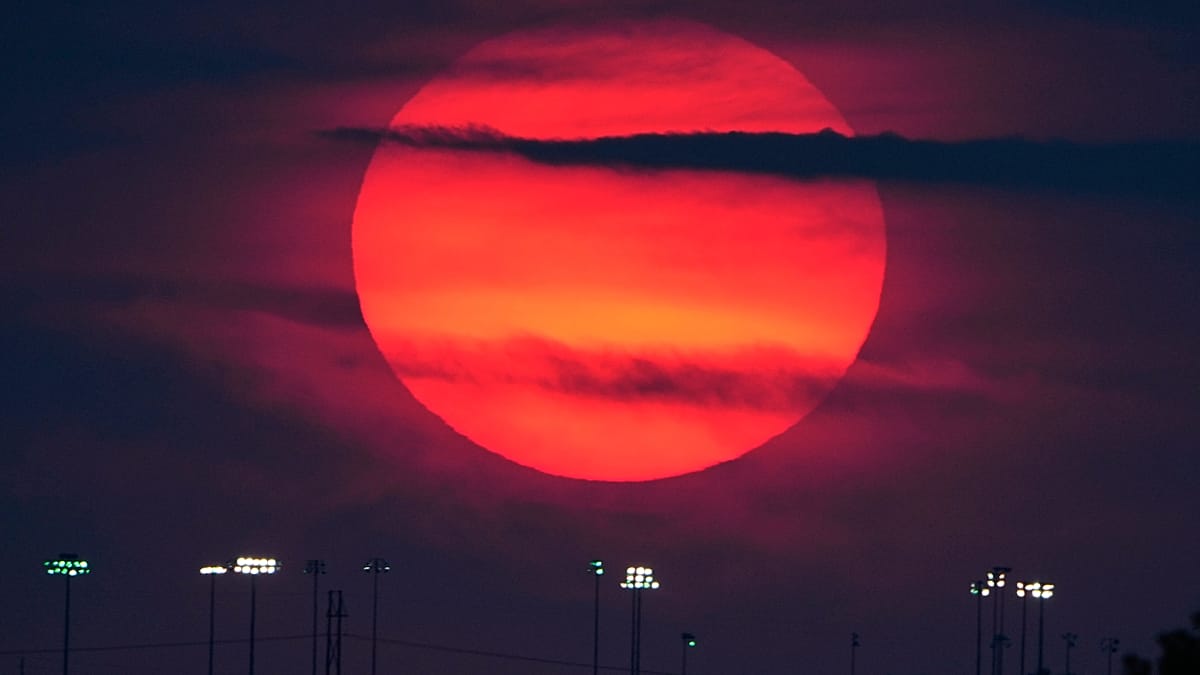
    The outer planets of the solar system will be thrown into chaos roughly a billion years after the Sun dies, a new study has found, cutting their expected life span a billion-fold.

    Previous estimates put the stability of the giant planets’ orbits at around a quintillion years, far longer than the current age of the universe.

    Researchers at California’s Institute of Technology (Caltech) were investigating how the sun’s slow death would impact the outer planets including Jupiter, Saturn, Uranus and Neptune.

    It was also previously believed by many scientists, including Isaac Newton, that the sun would shed its mass smoothly as it slowly died, transitioning first into a Red Giant and later a White Dwarf.

    Earth, Venus and Mercury would be the first to go, consumed by the Sun as it expanded into a Red Giant, with Mars the lone survivor, sitting far enough away to escape the engulfment.

    Earlier studies found the outer planets would survive this process, with their orbits widening to about twice their current size as the Sun lost mass. Their eventual break-up was expected to come only from passing stars, over 30 to 100 billion years.

    The new findings suggest this picture is wrong. Instead, the outer planets will be thrown into disorder roughly one billion years after the Sun becomes a white dwarf, which is still billions of years away.

    When the Sun becomes a white dwarf, it rapidly cools and shrinks to half its current size, but this will not be a smooth process and previously thought.

    The research argues the star will lose its mass in violent, random ejections known as “stochastic kicks,” rather than a calm, consistent release.

    The solar system is 4.57 billion years old, and the Sun has around five billion years left before it swells into a red giant. Scientists had long assumed the giant planets would outlast it by an almost unimaginable stretch of time.

    The research was carried out using high-performance supercomputers and hundreds of advanced N-body numeral simulations, with no AI tools involved whatsoever.

    The researchers programmed a virtual model of the solar system containing the Sun, Jupiter, Saturn, Uranus and Neptune, which the supercomputers then calculated and simulated the velocity and position over billions of years.

    What made this year analysis different from previous research was the scripting of the sun losing its mass as it died model iterations tested in order to come to a consensus conclusion

    The findings were reported in a study called ‘Terminal Instability of the Solar System Triggered by Stochastic Solar Mass Loss’, published in The Astrophysical Journal Letters.

    Source: www.euronews.com

    apart fall Solar system Will
    Share. Facebook Twitter Pinterest LinkedIn Tumblr Telegram Email
    Peter Novak
    • Website

    Related Posts

    Where do Europe’s best pension systems rank and are they secure?

    October 21, 2026

    August arrivals up 2.6%, foreign visitors lead growth

    October 21, 2026

    Trump’s embrace of Putin jolts Europe, but not enough to break away

    October 21, 2026
    Leave A Reply Cancel Reply

    WARSAW WEATHER
    Economy News

    AFP warns Australia of ‘tsunami of youth crime’ and radicalisation accelerated by AI

    By Peter NovakOctober 21, 20260

    Children as young as 12 among dozens subject to federal police operations since 2020, parliamentary inquiry hears

    Meta’s Muse hits 10M US downloads in 40 days, a milestone reached by only 11 other apps

    October 21, 2026

    Od 30 lat dostaje pieniądze za rolę w filmie, w którym nie zagrał

    October 21, 2026
    Top Trending
    Travel

    Flight cancellations hit 4-year high: Here are the worst airports and our tips for flying

    By Peter NovakSeptember 24, 20260

    If you found yourself stuck at an airport or stranded overnight this summer, you’re not alone.

    Culture

    Zmiażdżył całą konkurencję w 4 dni. Serial Netfliksa numerem 1 na świecie

    By Peter NovakSeptember 24, 20260

    Joanna Chojnacka24 września 2026, 10:50 17 września na Netfliksa trafił nowy sezon jednego z najbardziej kontrowersyjnych seriali oryginalnych, jakie posiada w swojej bibliotece znana platforma. Zgodnie z przewidywaniami tytuł natychmiast stał się globalnym hitem. Dodaj nas do ulubionych źródeł w Google

    Subscribe to News

    Subscribe to receive the latest breaking news, local updates, and top stories from Warsaw delivered to your inbox.

    Warsaw.Today is your trusted source for breaking news, local updates, business, politics, technology, sports, culture, and events from Warsaw, Poland—all in one place.

    Facebook X (Twitter) Instagram Pinterest YouTube

    AFP warns Australia of ‘tsunami of youth crime’ and radicalisation accelerated by AI

    October 21, 2026

    Meta’s Muse hits 10M US downloads in 40 days, a milestone reached by only 11 other apps

    October 21, 2026

    Od 30 lat dostaje pieniądze za rolę w filmie, w którym nie zagrał

    October 21, 2026

    Subscribe to Updates

    Subscribe to receive the latest breaking news, local updates, and top stories from Warsaw delivered to your inbox.

    © 2026 ThemeSphere. Designed by ThemeSphere.
    • About Us
    • Get In Touch
    • Disclaimer
    • Privacy Policy
    • Terms and Conditions

    Type above and press Enter to search. Press Esc to cancel.