



Naturalists divided over potential impact of proposals to increase number of wild raptors in England and Wales
White-tailed eagles reintroduced into England and Wales imperil endangered seabird populations and risk wiping out some colonies, ecologists and conservationists are warning.
Puffins, guillemots, razorbills, fulmars and kittiwakes are among the birds for which breeding populations could collapse if large numbers of white-tailed eagles are released, according to some academics and conservationists.
“Amidst all the excitement and enthusiasm for reintroducing white-tailed eagles, the fact that these birds will probably destroy our seabird colonies seems to have been completely overlooked,” said Tim Birkhead, an emeritus professor of ecology and evolution at the University of Sheffield.
The return of white-tailed eagles to Britain after they were driven to extinction in 1918 has been a great conservation success story in recent decades. But proposals to release up to 60 eagles in Gwent, south Wales, on top of 20 young birds already being released over the next three years on Exmoor, is dividing nature lovers.
The Gwent Wildlife Trust is supporting the proposed Gwent reintroduction while the Wildlife Trust of South & West Wales (WTSWW) is opposed.
Last month an eagle from the Exmoor release was sighted over the south Wales island of Skomer, a renowned seabird sanctuary where David Attenborough was filmed encountering puffins and shearwaters for his Wild Isles series. British seabirds have suffered the worst declines of any group of birds over the last five years, with populations falling by a fifth, but the seabird populations in south Wales are relatively healthy.
Sarah Kessell, the chief executive of WTSWW, said: “We’re increasingly alarmed about the reintroduction of white-tailed eagles across the UK as more evidence comes to light of their impact on cliff-nesting seabirds.
“The islands of Skomer and Skokholm are a sanctuary for globally important seabird populations, which are already under threat. The extra pressure of disturbance and displacement from white-tailed eagles could have a significant impact on breeding seabirds. We have an overwhelming obligation to protect the seabirds on the islands that we manage.”
White-tailed eagle chicks brought over from Norway to reintroduce them into Scotland in 1975 has led to a wild population now of 200 breeding pairs, with 45 birds successfully reintroduced to the Isle of Wight since 2019. Although there has been repeated illegal killing of the huge avian predator, the first English-born wild bird fledged from a nest in East Sussex in 2023. Wales has not yet restored the species to its skies.
Prof Geoff Hilton, the head of wetland evidence at the Wildfowl and Wetlands Trust (WWT), which is leading the Gwent reintroduction, said: “Conservation action has and always will carry an element of risk. But what’s essential is that we carefully evaluate those risks early, use robust evidence to investigate the scale of those risks, and balance them against potential opportunities.”
Hilton emphasised that white-tailed eagles were generalist feeders with a varied diet including carrion, fish and small mammals. Research published in 2020 of eagles east of the Baltic Sea found that birds of particular conservation concern in the EU accounted for approximately 1% of identified prey in a long-term study of eagle diets.
He said: “With careful phasing, we aim to establish seven to nine breeding pairs of white-tailed eagles over the next 10 years. Therefore, we don’t expect this reintroduction to significantly reduce or impact any single species population. We do, however, expect to see healthier, more balanced ecosystems and landscapes, as apex predators like these eagles start to thrive once again.”
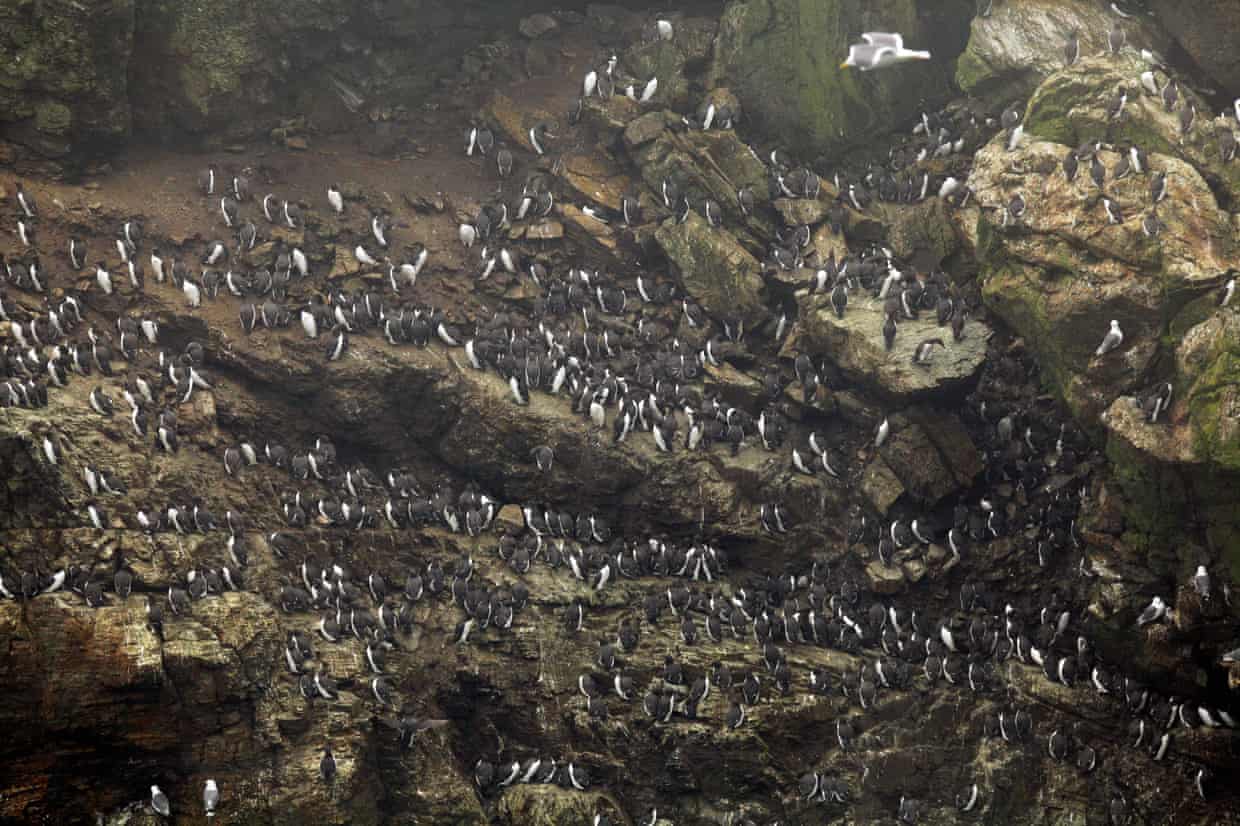
In evidence submitted by WTSWW against the Gwent proposals, Stephen Votier, a professor of seabird conservation and ecology at Heriot-Watt University, said: “It is clear that white-tailed eagles can have severe impacts on seabird populations – they seem especially vulnerable because the eagle can indirectly affect social aspects of breeding.”
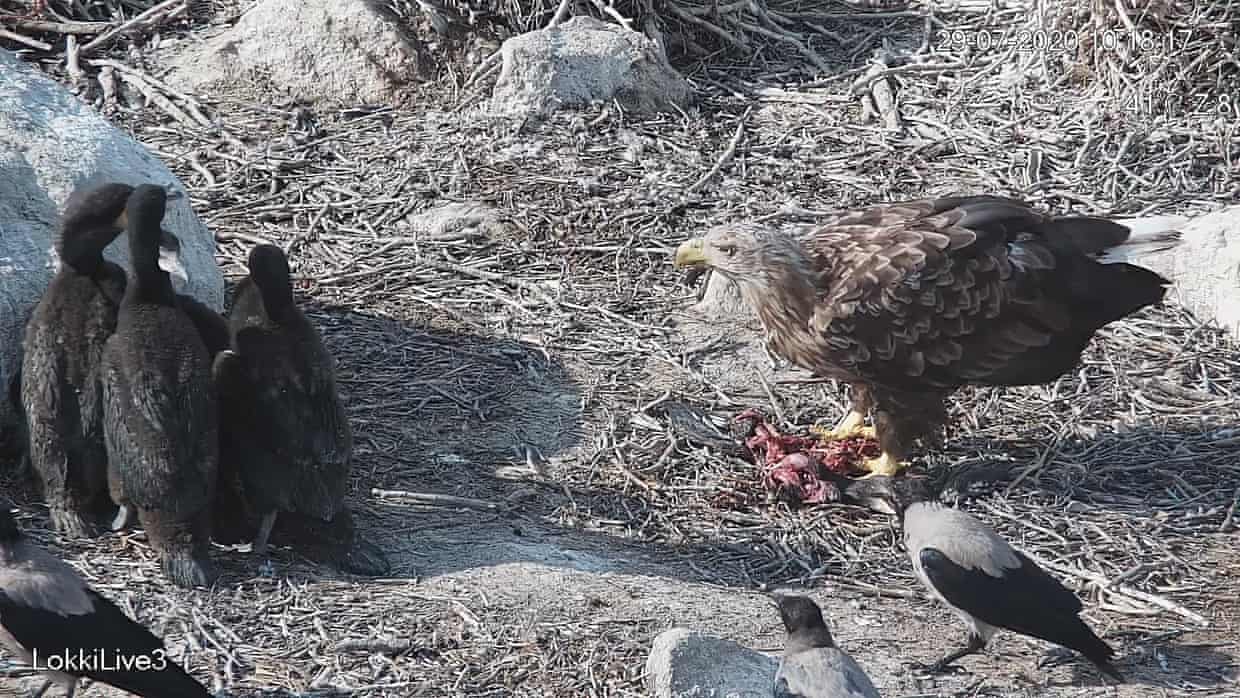
As well as directly predating seabirds and their young, indirect effects are likely to be much greater, say some researchers, because the fear induced by white-tailed eagles causes adult seabirds to temporarily desert their breeding sites, exposing chicks to predation by other birds including gulls and corvids.
Birkhead, who has studied the guillemot population on Skomer since 1972, said he would “love to see white-tailed eagles” but said scientific evidence of the predators hastening the extinction of seabird colonies in Scandinavia must be properly considered.
In 2023, a scientific paper found that in northern Norway an increasing abundance of white-tailed eagles accelerated the loss of a kittiwake colony in Røst in 2020 by “many years”. The colony was already in decline but the eagles’ impacts were greater because fewer fish for the kittiwakes compelled the birds to spend more time foraging and less time defending their young from predators.
Annette Fayet and Tycho Anker-Nilssen, co-authors of the study, said that although Røst had only two or three breeding pairs of eagles, large numbers of immature eagles gathered there and disturbed the nesting seabirds.
Asked about the applicability of their findings to Wales, they said: “We cannot assume that the situation in Norway will be reproduced in south Wales but find it impossible to rule out that something similar could happen there too, in time.”
Roger Morgan-Grenville, the author of a book about white-tailed eagles that will be published next spring, said there was a consistent association between the rising number of white-tailed eagles on the Baltic coast and the reduced breeding success of the cormorant, and similar negative impacts on northern gannets and kittiwakes in western Norway. He said: “I’m absolutely in favour of these magnificent birds covering our skies again but we need to listen to all voices, and not just the loud ones, and we need to accept that the landscape that the white-tailed has come back into is a far more depleted one than it left in 1918.”
Natural Resources Wales is assessing the application for the release of white-tailed eagles in Gwent, with a verdict expected by the end of this year. A spokesperson said: “If we are minded to grant a licence, there will be a public consultation process from late 2026 into early 2027 before any final decision is made.”
Explore more on these topicsReuse this content
Source: www.theguardian.com
