


Close Menu
Warsaw.Today
    What's Hot

    What is northern Europe’s new drone and warship plan to counter Russia?

    November 11, 2026

    Over 60% of women in German military report sexual harassment at work

    November 11, 2026

    AI datacentres plan on-site power stations on huge scale despite climate risks, research reveals

    November 11, 2026
    Facebook X (Twitter) Instagram
    Trending
    • What is northern Europe’s new drone and warship plan to counter Russia?
    • Over 60% of women in German military report sexual harassment at work
    • AI datacentres plan on-site power stations on huge scale despite climate risks, research reveals
    • Santorini seeks year-round tourism by promoting gastronomy and culture
    • NAZA documentary on Gaza killings becomes one of year’s most watched
    • Breaking news. – At least 300 Italian schools evacuated after bomb threats
    • What’s the Falklands oil project at the heart of latest UK-Argentina spat?
    • Trump’s $10bn defamation case against BBC to go ahead
    Facebook X (Twitter) Instagram
    Warsaw.TodayWarsaw.Today
    Demo
    • Home
    • News
    • World
    • Sports
    • Business
    • Culture
    • Politics
    • Travel
    • Technology
    Warsaw.Today
    Home»News»EU candidates will not have a say on anti-Orbán safeguards
    News

    EU candidates will not have a say on anti-Orbán safeguards

    Peter NovakBy Peter NovakNovember 10, 2026No Comments0 Views
    Facebook Twitter Pinterest LinkedIn WhatsApp Reddit Tumblr Email
    EU candidates will not have a say on anti-Orbán safeguards
    Share
    Facebook Twitter LinkedIn Pinterest Email

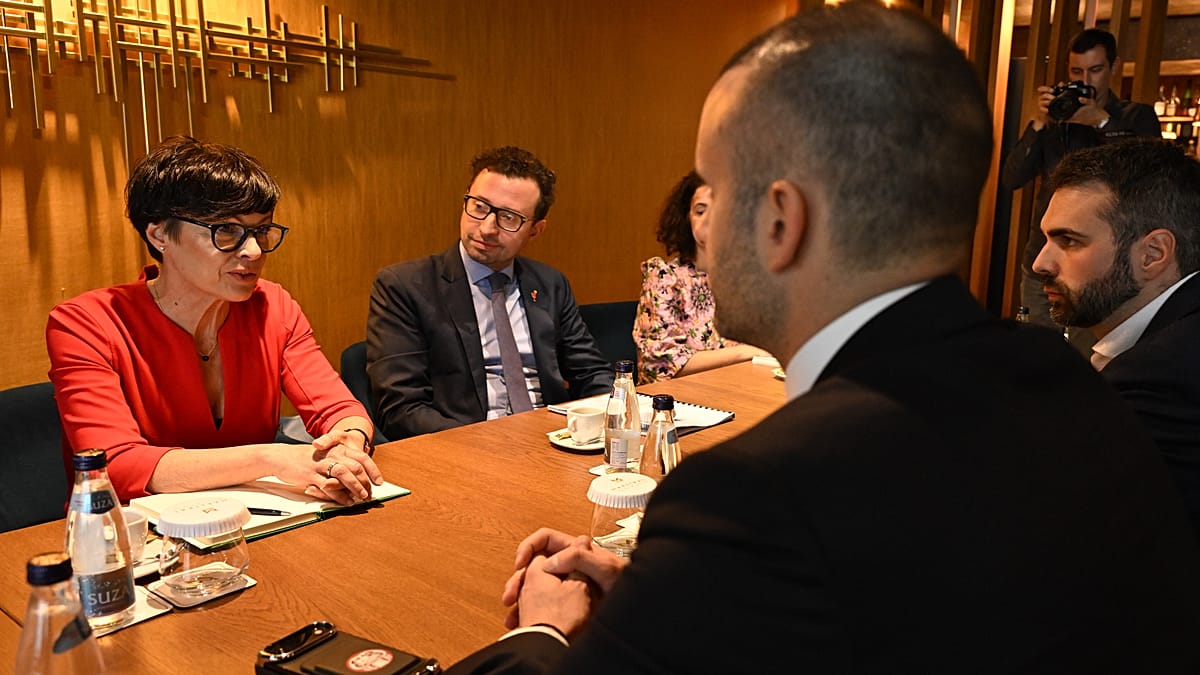
    Montenegro is the first to test the EU’s new safeguards, with member states expected to reach a position as early as next week. But contrary to the other negotiating chapters, Podgorica is finding out that the safeguards, including the possibility of suspending voting rights, are non-negotiable.

    The EU is discussing stronger safeguards for new member states, including the possibility of suspending voting rights, with Montenegro first in line. But candidate countries face a take-it-or-leave-it deal.

    Last month, the European Commission proposed a 15-year probation period for newcomers, designed to allow swift action against those that violate EU values and the principle of sincere cooperation.

    The proposal stems from requests by five of the EU’s founding members to draw lessons from the experience of Hungary’s Viktor Orbán, who for years blackmailed the bloc into concessions by wielding his veto over major decisions.

    “When I mentioned this for the first time, I said: no new Trojan horses in the European Union. This was still before the elections in Hungary. Today I can say no more Viktor Orbáns,” Enlargement Commissioner Marta Kos told reporters presenting the measure.

    There is only one catch: candidate countries have no say in these institutional safeguards. They must accept them as they are or walk away from the prospect of EU membership altogether.

    For Montenegro, the most advanced candidate, walking away is hardly an option after well over a decade of investing massive administrative capacity, not to mention the political capital of pro-EU forces, in joining the bloc.

    Yet changing the terms of membership at the last mile leaves a bitter aftertaste for Montenegrin officials, who are careful not to criticise the measures openly for fear of derailing the process.

    “It was always the case. Safeguards were always a bit one-sided,” a senior EU official told Euronews on condition of anonymity.

    Safeguards per se are not new: they featured in the accession treaties of Croatia, Bulgaria and Romania. But those covered potential breaches of economic, internal market and justice rules.

    Now, drawing on Orbán’s experience, Brussels is discussing going as far as suspending a country’s voting rights. Here, too, there is a major difference from the rest of the accession process, procedural as much as political.

    Normally, a chapter is opened once the candidate meets the EU’s initial conditions. The candidate then implements the required reforms and meets any interim targets and, once all requirements are fulfilled, the EU agrees to provisionally close the chapter.

    This time, Montenegro is not asked to submit a negotiating position, nor to meet any targets beyond accepting what is on the table, making the safeguards effectively non-negotiable.

    The Commission is currently preparing EU common positions under Chapters 34 and 35, including draft treaty provisions on institutional safeguards.

    Last month, it sent a first draft of the safeguards to be included in Montenegro’s accession treaty to member states for feedback. The Irish presidency of the EU Council is now collecting governments’ views and aims to send a consolidated position at ambassador level next week.

    Once EU countries finalise their position, which is more general on safeguards for candidate countries, the Commission is expected to reflect it in Montenegro’s treaty.

    In other words, Podgorica’s best chance of influencing the outcome is to lobby member states: once the EU position is set, there will be hardly any way to move it.

    Three issues dominate the debate: the measures the safeguard could trigger, such as suspending voting rights for the most serious offences; its duration, which candidate countries consider too long at 15 years; and governance, as the proposed decision-making method would give the Commission significant sway.

    Some EU capitals are sympathetic to the candidates’ arguments and want to distinguish between the political demand for stricter safeguards and a legal text that can be enforced.

    Italy, a member of the so-called Friends of the Western Balkans, has pushed for respecting the equality of member states and for safeguards that are proportionate and tailor-made for each candidate.

    The Netherlands, by contrast, has championed no differentiation between EU hopefuls. But whichever worldview will eventually prevail is fully outside Montenegro’s hands.

    Source: www.euronews.com

    antiOrbn candidates have safeguards Will
    Share. Facebook Twitter Pinterest LinkedIn Tumblr Telegram Email
    Peter Novak
    • Website

    Related Posts

    Over 60% of women in German military report sexual harassment at work

    November 11, 2026

    Santorini seeks year-round tourism by promoting gastronomy and culture

    November 11, 2026

    Breaking news. – At least 300 Italian schools evacuated after bomb threats

    November 11, 2026
    Leave A Reply Cancel Reply

    WARSAW WEATHER
    Economy News
    World

    What is northern Europe’s new drone and warship plan to counter Russia?

    By Peter NovakNovember 11, 20260

    The United Kingdom has unveiled a plan to integrate the maritime defence capabilities of 10 countries, including the sharing of sea drones and warships, in response to what European countries see as a growing threat from Russia.

    Over 60% of women in German military report sexual harassment at work

    November 11, 2026

    AI datacentres plan on-site power stations on huge scale despite climate risks, research reveals

    November 11, 2026
    Top Trending
    Culture

    “Cieszę się, że moja matka umarła”. Autobiografia eks dziecięcej gwiazdy wyprzedała się na pniu

    By Peter NovakOctober 7, 20260

    Jennette McCurdy największą popularność zyskała dzięki serialowi komediowemu “iCarly”, który nadawany był na kanale Nickelodeon od 2007 do 2012 roku. Grała w nim główną rolę Sam Puckett, do której też wróciła po zakończeniu emisji podstawowego sitcomu. Zrobiła to w 2013 roku na wyraźne życzenie matki – w serialu “Sam & Cat” występowała przez rok u…

    Technology

    Why is NASA bringing 7,500 contractors back to work as civil servants?

    By Peter NovakOctober 7, 20260

    As a flight director during NASA’s Apollo missions, Gerry Griffin led several lunar landings. He helped bring the crew of Apollo 13 safely back to Earth. Later, he directed Johnson Space Center in Houston.

    News

    IMF signals austerity is back as global public debt nears 100% of GDP

    By Peter NovakOctober 7, 20261

    The days when governments could lean on cheap money and fast growth to keep their debts in check are over, according to the head of the International Monetary Fund (IMF), who called for spending discipline and tighter monetary policy around the world.

    Subscribe to News

    Subscribe to receive the latest breaking news, local updates, and top stories from Warsaw delivered to your inbox.

    Warsaw.Today is your trusted source for breaking news, local updates, business, politics, technology, sports, culture, and events from Warsaw, Poland—all in one place.

    Facebook X (Twitter) Instagram Pinterest YouTube

    What is northern Europe’s new drone and warship plan to counter Russia?

    November 11, 2026

    Over 60% of women in German military report sexual harassment at work

    November 11, 2026

    AI datacentres plan on-site power stations on huge scale despite climate risks, research reveals

    November 11, 2026

    Subscribe to Updates

    Subscribe to receive the latest breaking news, local updates, and top stories from Warsaw delivered to your inbox.

    © 2026 ThemeSphere. Designed by ThemeSphere.
    • About Us
    • Get In Touch
    • Disclaimer
    • Privacy Policy
    • Terms and Conditions

    Type above and press Enter to search. Press Esc to cancel.