


Close Menu
Warsaw.Today
    What's Hot

    Pokochałam ten serial od pierwszego odcinka. Dziwne, że nie jest o nim głośno

    November 8, 2026

    Environmentalists criticise choice of Earthshot prize venue owned by fossil fuel firm

    November 8, 2026

    Physicist says time travel only goes forward

    November 8, 2026
    Facebook X (Twitter) Instagram
    Trending
    • Pokochałam ten serial od pierwszego odcinka. Dziwne, że nie jest o nim głośno
    • Environmentalists criticise choice of Earthshot prize venue owned by fossil fuel firm
    • Physicist says time travel only goes forward
    • Ten film to największa klapa w historii Hollywood. Aktor obwinia krytyków
    • Hot fridges, a fake nuclear alert and a $6bn heist: are we in the foothills of a hacking epidemic?
    • How cloudy weather is causing a problem for Europe’s solar boom
    • Wiem, co to jest szczęście. Nic mnie nie obchodzi, oprócz…
    • Uyghurs facing deportation by Thailand say they will be ‘like slaves’ in China
    Facebook X (Twitter) Instagram
    Warsaw.TodayWarsaw.Today
    Demo
    • Home
    • News
    • World
    • Sports
    • Business
    • Culture
    • Politics
    • Travel
    • Technology
    Warsaw.Today
    Home»News»Why scientists are heating old wind turbine blades to 2,000°C
    News

    Why scientists are heating old wind turbine blades to 2,000°C

    Peter NovakBy Peter NovakNovember 7, 2026No Comments0 Views
    Facebook Twitter Pinterest LinkedIn WhatsApp Reddit Tumblr Email
    Why scientists are heating old wind turbine blades to 2,000°C
    Share
    Facebook Twitter LinkedIn Pinterest Email

    Europe risks becoming a dumping ground for hard-to-recycle wind turbine blades but new research has found a ‘hot’ solution

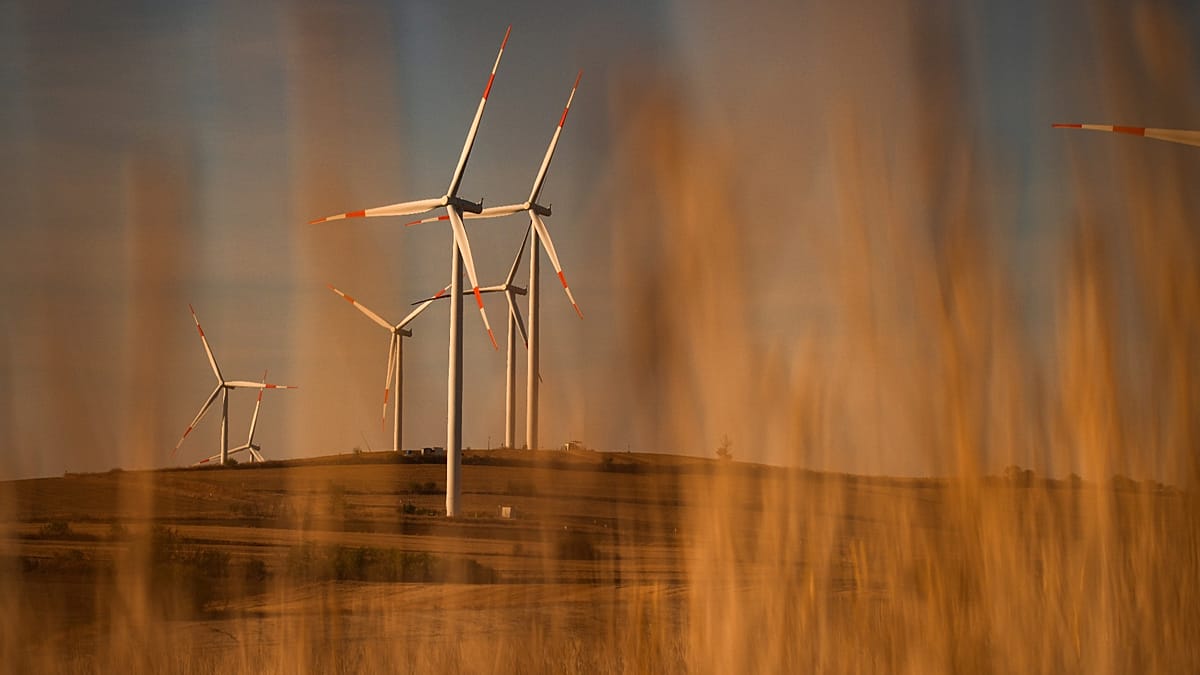
    Wind energy has been described as one of the “cheapest and most scalable solutions” to the climate crisis – but its boom is creating growing concern.

    Turbines dotted across Europe and its waters are engineered to withstand some of the harshest conditions, from intense UV radiation to strong wind gusts, extreme temperatures and even lightning strikes.

    While around 85 to 90 per cent of a wind turbine’s total mass can be recycled, the durability of the blades makes it difficult for the remaining elements to be reprocessed.

    Wind turbine blades are clogging up Europe’s landfills

    As a result, many turbine blades end up in landfill sites once they are decommissioned, typically after 20 years of service, or are incinerated.

    Annual decommissioned blade waste in Europe is projected to increase from 20,000 tonnes in 2025 to 55,000 tonnes by 2030 as older fleets reach their end-of-life.

    WindEurope, the European wind industry association, introduced a voluntary industry-wide landfill ban that came into effect last year to tackle this.

    The association is urging EU policymakers to enshrine the ban into formal legislation, arguing it would further accelerate the development of sustainable recycling technologies.

    Wind turbines undergo flash joule heating

    Researchers have recently discovered a new way to give hard-to-recycle wind turbine blades a second life – by subjecting them to a “brief burst of intense heat”.

    The study, published in the science journal Chem Circularity, found so-called ‘flash joule heating’ can transform blades – often made from silica-containing fiberglass and carbon-rich polymer resin – into silicon carbide and graphene, two valuable materials for manufacturing.

    Blades were heated to about 2,000°C in seconds; at such high temperatures, carbon can react with silica to form silicon carbide, a hard, heat-resistant material.

    Carbon can also reorganise into graphene under these conditions, a material known for its strength and ability to conduct heat and electricity.

    The research team found that adding the broken-down blades to other materials before heating made the new material more useful for creating new rotor blades.

    Just 0.3 per cent (by weight) of the recovered materials was able to make resin stiffer and stronger and improve its resistance to deformation by 27 per cent under tension and nine per cent when bent.

    “The mixture of silicon carbide and graphene can be incorporated back into resins for new wind turbine blades, improving their mechanical and thermal properties,” says senior author and chemical and environmental engineer Bing Deng of Tsinghua University, China.

    “That is more than recycling – it’s upcycling. We’re turning something that has little value into something that’s worth much more.”

    Source: www.euronews.com

    blades heating Scientists turbine wind
    Share. Facebook Twitter Pinterest LinkedIn Tumblr Telegram Email
    Peter Novak
    • Website

    Related Posts

    Physicist says time travel only goes forward

    November 8, 2026

    How cloudy weather is causing a problem for Europe’s solar boom

    November 8, 2026

    Footage shows people taking cover as a gunman opens fire in Krakow

    November 7, 2026
    Leave A Reply Cancel Reply

    WARSAW WEATHER
    Economy News
    Culture

    Pokochałam ten serial od pierwszego odcinka. Dziwne, że nie jest o nim głośno

    By Peter NovakNovember 8, 20260

    Supermarket budowlany. W jednej z alejek od podłogi do sufitu piętrzą się ciemnoniebieskie plastikowe wiaderka. Na ich tle stoi brodaty doradca klienta w adekwatnym do stanowiska uniformie. Ma mało entuzjastyczną minę, na oczy spadają mu długie, siwe włosy. Perfekcyjnie pasują do brody w podobnym kolorze. Kiedy podchodzi do niego klient i pyta, czy w ofercie…

    Environmentalists criticise choice of Earthshot prize venue owned by fossil fuel firm

    November 8, 2026

    Physicist says time travel only goes forward

    November 8, 2026
    Top Trending
    Travel

    Delta: Phoenix – Maui, Hawaii (and vice versa). $328 (Basic Economy) / $458 (Regular Economy). Roundtrip, including all Taxes

    By Peter NovakOctober 6, 20260

    The $458 fare is a regular economy fare with advance seat assignment and normal size carry-on included.

    News

    Turkish grain ship sinks in Black Sea after deadly drone attack

    By Peter NovakOctober 6, 20260

    A Turkish-owned cargo ship carrying grain in the Black Sea was attacked by at least one drone and ultimately sank after catching fire on Monday, reportedly killing two crew members, wounding three others, while one is still missing, Romanian authorities said, as quoted by Euronews Romania.

    Technology

    At 19, founder raises $11M for Ghost, maker of a $3,499 computer for personal AI

    By Peter NovakOctober 6, 20260

    For much of his life, Zain Javaid, 19, wanted to be a quant who uses math and data to guide his investment decisions. And for a while, he was one. But he got bored. Then, in 2022, ChatGPT was released, and he told TechCrunch, “I felt fundamentally excited in a way that I never had…

    Subscribe to News

    Subscribe to receive the latest breaking news, local updates, and top stories from Warsaw delivered to your inbox.

    Warsaw.Today is your trusted source for breaking news, local updates, business, politics, technology, sports, culture, and events from Warsaw, Poland—all in one place.

    Facebook X (Twitter) Instagram Pinterest YouTube

    Pokochałam ten serial od pierwszego odcinka. Dziwne, że nie jest o nim głośno

    November 8, 2026

    Environmentalists criticise choice of Earthshot prize venue owned by fossil fuel firm

    November 8, 2026

    Physicist says time travel only goes forward

    November 8, 2026

    Subscribe to Updates

    Subscribe to receive the latest breaking news, local updates, and top stories from Warsaw delivered to your inbox.

    © 2026 ThemeSphere. Designed by ThemeSphere.
    • About Us
    • Get In Touch
    • Disclaimer
    • Privacy Policy
    • Terms and Conditions

    Type above and press Enter to search. Press Esc to cancel.