


Close Menu
Warsaw.Today
    What's Hot

    In Israel election, Palestinian citizens weigh fear against disillusionment

    October 22, 2026

    Student protesters flood Belgrade ahead of snap elections

    October 22, 2026

    The world is $365 trillion in debt, and the interest bill is climbing

    October 22, 2026
    Facebook X (Twitter) Instagram
    Trending
    • In Israel election, Palestinian citizens weigh fear against disillusionment
    • Student protesters flood Belgrade ahead of snap elections
    • The world is $365 trillion in debt, and the interest bill is climbing
    • Video. French police union sues French government over recent violence
    • Man United’s Carrick not worried about his job despite ‘unacceptable’ loss
    • Overnight attacks resume between Russia and Ukraine
    • Airbnb guests freed from chores involving ‘significant effort’ under new global rules
    • France on edge as Macron faces backlash, Putin signals peace talks
    Facebook X (Twitter) Instagram
    Warsaw.TodayWarsaw.Today
    Demo
    • Home
    • News
    • World
    • Sports
    • Business
    • Culture
    • Politics
    • Travel
    • Technology
    Warsaw.Today
    Home»News»The solar system will fall apart far sooner than anyone thought, scientists say
    News

    The solar system will fall apart far sooner than anyone thought, scientists say

    Peter NovakBy Peter NovakOctober 2, 2026No Comments0 Views
    Facebook Twitter Pinterest LinkedIn WhatsApp Reddit Tumblr Email
    The solar system will fall apart far sooner than anyone thought, scientists say
    Share
    Facebook Twitter LinkedIn Pinterest Email

    Earth will be long gone by then, but new research shows the outer planets will be thrown out too, and a billion times earlier than expected, according to astrophysics research.

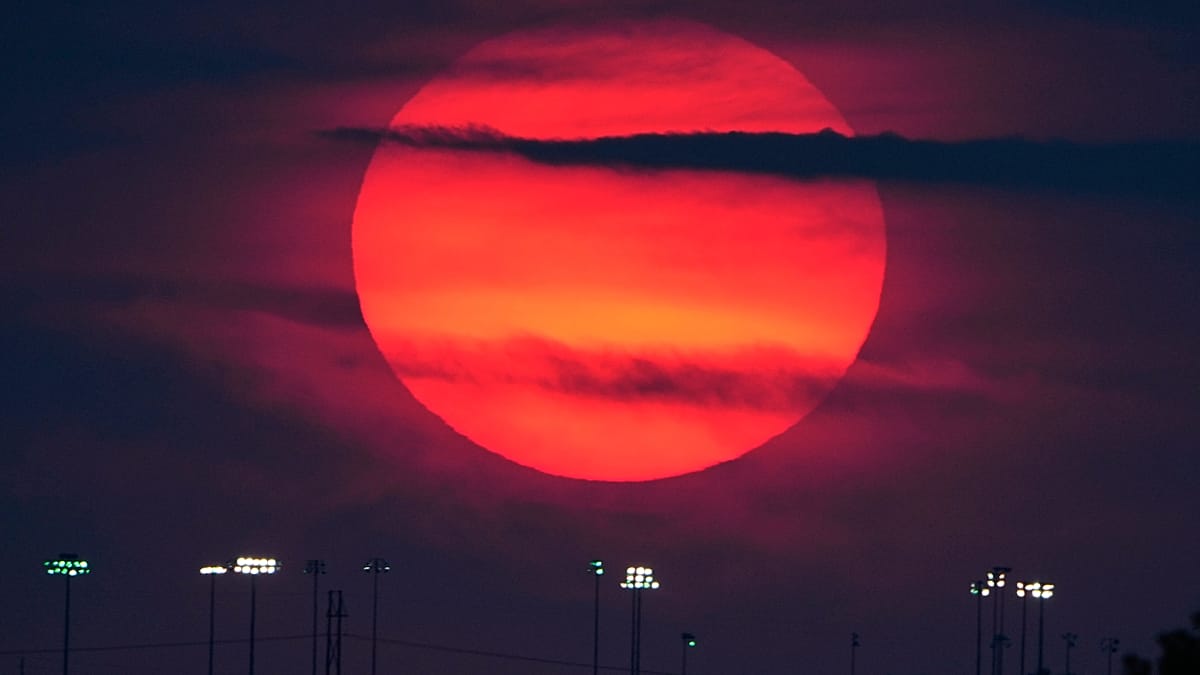
    The outer planets of the solar system will be thrown into chaos roughly a billion years after the Sun dies, a new study has found, cutting their expected life span a billion-fold.

    Previous estimates put the stability of the giant planets’ orbits at around a quintillion years, far longer than the current age of the universe.

    Researchers at California’s Institute of Technology (Caltech) were investigating how the sun’s slow death would impact the outer planets including Jupiter, Saturn, Uranus and Neptune.

    It was also previously believed by many scientists, including Isaac Newton, that the sun would shed its mass smoothly as it slowly died, transitioning first into a Red Giant and later a White Dwarf.

    Earth, Venus and Mercury would be the first to go, consumed by the Sun as it expanded into a Red Giant, with Mars the lone survivor, sitting far enough away to escape the engulfment.

    Earlier studies found the outer planets would survive this process, with their orbits widening to about twice their current size as the Sun lost mass. Their eventual break-up was expected to come only from passing stars, over 30 to 100 billion years.

    The new findings suggest this picture is wrong. Instead, the outer planets will be thrown into disorder roughly one billion years after the Sun becomes a white dwarf, which is still billions of years away.

    When the Sun becomes a white dwarf, it rapidly cools and shrinks to half its current size, but this will not be a smooth process and previously thought.

    The research argues the star will lose its mass in violent, random ejections known as “stochastic kicks,” rather than a calm, consistent release.

    The solar system is 4.57 billion years old, and the Sun has around five billion years left before it swells into a red giant. Scientists had long assumed the giant planets would outlast it by an almost unimaginable stretch of time.

    The research was carried out using high-performance supercomputers and hundreds of advanced N-body numeral simulations, with no AI tools involved whatsoever.

    The researchers programmed a virtual model of the solar system containing the Sun, Jupiter, Saturn, Uranus and Neptune, which the supercomputers then calculated and simulated the velocity and position over billions of years.

    What made this year analysis different from previous research was the scripting of the sun losing its mass as it died model iterations tested in order to come to a consensus conclusion

    The findings were reported in a study called ‘Terminal Instability of the Solar System Triggered by Stochastic Solar Mass Loss’, published in The Astrophysical Journal Letters.

    Source: www.euronews.com

    apart fall Solar system Will
    Share. Facebook Twitter Pinterest LinkedIn Tumblr Telegram Email
    Peter Novak
    • Website

    Related Posts

    Student protesters flood Belgrade ahead of snap elections

    October 22, 2026

    Video. French police union sues French government over recent violence

    October 22, 2026

    Overnight attacks resume between Russia and Ukraine

    October 22, 2026
    Leave A Reply Cancel Reply

    WARSAW WEATHER
    Economy News
    World

    In Israel election, Palestinian citizens weigh fear against disillusionment

    By Peter NovakOctober 22, 20260

    Occupied East Jerusalem – Laila Atamneh, 19, remembers her parents arguing at the dinner table every time Israel would hold an election.

    Student protesters flood Belgrade ahead of snap elections

    October 22, 2026

    The world is $365 trillion in debt, and the interest bill is climbing

    October 22, 2026
    Top Trending
    World

    Switzerland’s neutrality vote is asking the wrong question

    By Peter NovakSeptember 25, 20260

    On September 27, Switzerland votes on whether to lock a stricter definition of neutrality into its constitution. The initiative would bar Switzerland from cooperating with a military alliance unless it were under military attack or such an attack were being prepared, and prevent it from imposing sanctions on a belligerent state unless those sanctions were…

    Technology

    Apple’s hyper-pricey M5 Ultra Mac Studio made me into a vibe coder

    By Peter NovakSeptember 25, 20260

    When Apple was using Intel processors and AMD GPUs, the idea of an expandable and upgradeable tower made sense. But Apple Silicon chips bring the CPU, GPU, and memory interface all under one roof in a way that makes that sort of upgradeability not just superfluous but impossible. At least not without breaking some of…

    News

    What is working and what is holding them back

    By Peter NovakSeptember 25, 20260

    This article was authored by Jens Teutrine, DACH representative (Germany, Austria and Switzerland) at the Consumer Choice Center, and a former Member of Germany’s Federal Parliament. The views expressed in this article are those of the author and do not necessarily reflect the official policy or positions of EU Tech Loop or Euronews.

    Subscribe to News

    Subscribe to receive the latest breaking news, local updates, and top stories from Warsaw delivered to your inbox.

    Warsaw.Today is your trusted source for breaking news, local updates, business, politics, technology, sports, culture, and events from Warsaw, Poland—all in one place.

    Facebook X (Twitter) Instagram Pinterest YouTube

    In Israel election, Palestinian citizens weigh fear against disillusionment

    October 22, 2026

    Student protesters flood Belgrade ahead of snap elections

    October 22, 2026

    The world is $365 trillion in debt, and the interest bill is climbing

    October 22, 2026

    Subscribe to Updates

    Subscribe to receive the latest breaking news, local updates, and top stories from Warsaw delivered to your inbox.

    © 2026 ThemeSphere. Designed by ThemeSphere.
    • About Us
    • Get In Touch
    • Disclaimer
    • Privacy Policy
    • Terms and Conditions

    Type above and press Enter to search. Press Esc to cancel.