



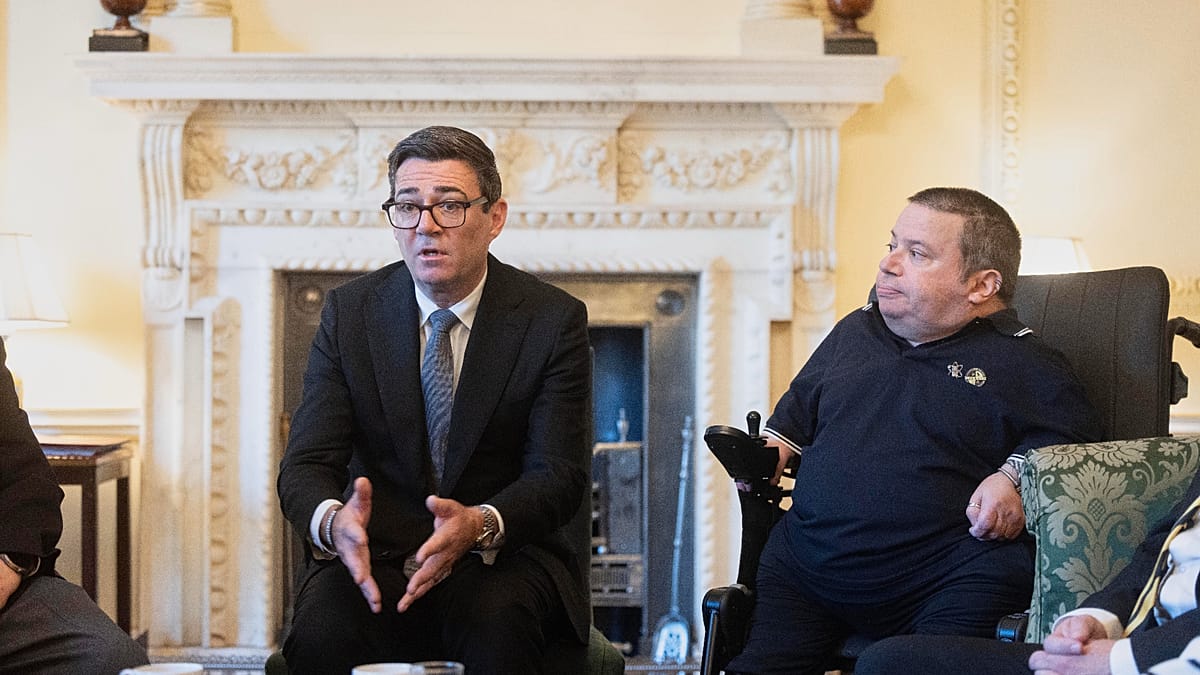
Veterans say they were effectively used as test subjects, with some exposed to radioactive fallout without adequate protection.
UK Prime Minister Andy Burnham has announced an independent inquiry into the impact of Britain’s Cold War nuclear weapons tests on military veterans and their families.
In a statement, the prime minister said: “Nuclear test veterans and their families have waited too long for the truth, and that’s exactly what the independent panel will establish.”
Around 22,000 British service personnel witnessed nuclear tests in the Indian and Pacific oceans between 1952 and 1967. Many of those affected say they felt they were used as test subjects, with some exposed to radioactive fallout without adequate protection.
Veterans and their families have campaigned for recognition and compensation for around 40 years, linking the tests to illnesses affecting both participants and, in some cases, their children.
Campaigners met the prime minister at an event at 10 Downing Street. It came a day after the BBC aired a special edition of Newsnight on Tuesday, in which some surviving veterans shared their experiences.
Britain’s nuclear tests
The UK’s first atmospheric atomic test took place on 3 October 1952, when a plutonium implosion device was detonated near the Montebello Islands off Western Australia.
Dozens more nuclear explosions were carried out by the UK in Australia and Pacific territories, including Kiritimati, formerly known as Christmas Island.
Campaigners say many military personnel were exposed to nuclear fallout after being ordered to fly through mushroom clouds or witness explosions without protective equipment.
Unlike the United States and France, the UK has no dedicated compensation scheme for nuclear test veterans.
Britain’s Ministry of Defence has said there was no evidence that Britain’s nuclear tests had caused increased health risks, citing four studies as well as research by Brunel University in 2022.
However, veterans and campaigners have accused the MoD of withholding complete medical records, including blood and urine test results, which they argue could help establish a link between radiation exposure and illness later in life.
The MoD released some official documents in July 2026, but said some records may have been inadvertently destroyed three years earlier.
An independent panel will take on the investigation
The British government says the panel will be modelled on the Hillsborough Independent Panel, rather than being a conventional statutory public inquiry. It says this should allow for a faster, more collaborative process, with veterans and their families closely involved.
The government says the panel’s terms of reference are likely to include the conditions servicemen were exposed to, what the state knew and when, advice given to ministers and statements made to Parliament, as well as how veterans and their health concerns were handled.
The panel is expected to deliver an interim report by 3 October 2027, the 75th anniversary of Britain’s first nuclear weapons test.
Andy Burnham said his government would also pursue memorialisation, education and research alongside the inquiry, rather than waiting for its final conclusions.
A national memorial service is being planned for 3 October 2027.
Source: www.euronews.com
