


Close Menu
Warsaw.Today
    What's Hot

    Madeira’s marine reserves are working

    November 22, 2026

    Mężczyzna “stawia na swoim”, a kobieta…

    November 22, 2026

    Kenya’s internet metering bill raises privacy and affordability concerns

    November 22, 2026
    Facebook X (Twitter) Instagram
    Trending
    • Madeira’s marine reserves are working
    • Mężczyzna “stawia na swoim”, a kobieta…
    • Kenya’s internet metering bill raises privacy and affordability concerns
    • South Korea education minister resigns after AI cheating scandal engulfs university exams
    • Fred Nile, former NSW politician and figurehead of the rightwing Christian Democratic party, dies aged 92
    • American: Washington D.C. – Santa Ana (Orange County), California (and vice versa). $200 (Basic Economy) / $330 (Regular Economy). Roundtrip, including all Taxes
    • Korean Air: New York – Kuala Lumpur, Malaysia. $832. Roundtrip, including all Taxes
    • Scandinavian Airlines: Miami – Gdansk, Poland. $669 (Basic Economy) / $749 (Regular Economy). Roundtrip, including all Taxes
    Facebook X (Twitter) Instagram
    Warsaw.TodayWarsaw.Today
    Demo
    • Home
    • News
    • World
    • Sports
    • Business
    • Culture
    • Politics
    • Travel
    • Technology
    Warsaw.Today
    Home»World»Rohingya who escaped Myanmar’s genocide tell their stories
    World

    Rohingya who escaped Myanmar’s genocide tell their stories

    Peter NovakBy Peter NovakNovember 21, 2026No Comments0 Views
    Facebook Twitter Pinterest LinkedIn WhatsApp Reddit Tumblr Email
    Share
    Facebook Twitter LinkedIn Pinterest Email

    Survivors recount rivers red with blood and burning nearby villages serving as an urgent warning to flee their homes

    Smoke was often the signal to run – seen from a distance, it was the indication for Rohingya that a neighbouring village was under attack and that theirs would be next.

    In other places, they saw the rivers run red and would pull out the bodies, perform quick burial rites and then flee.

    What happened during the escape from Myanmar – a journey through forests and over hills and rivers while being battered by monsoon rains – was a key part of the ruling made this week in The Hague that Myanmar had carried out a genocide against the Rohingya.
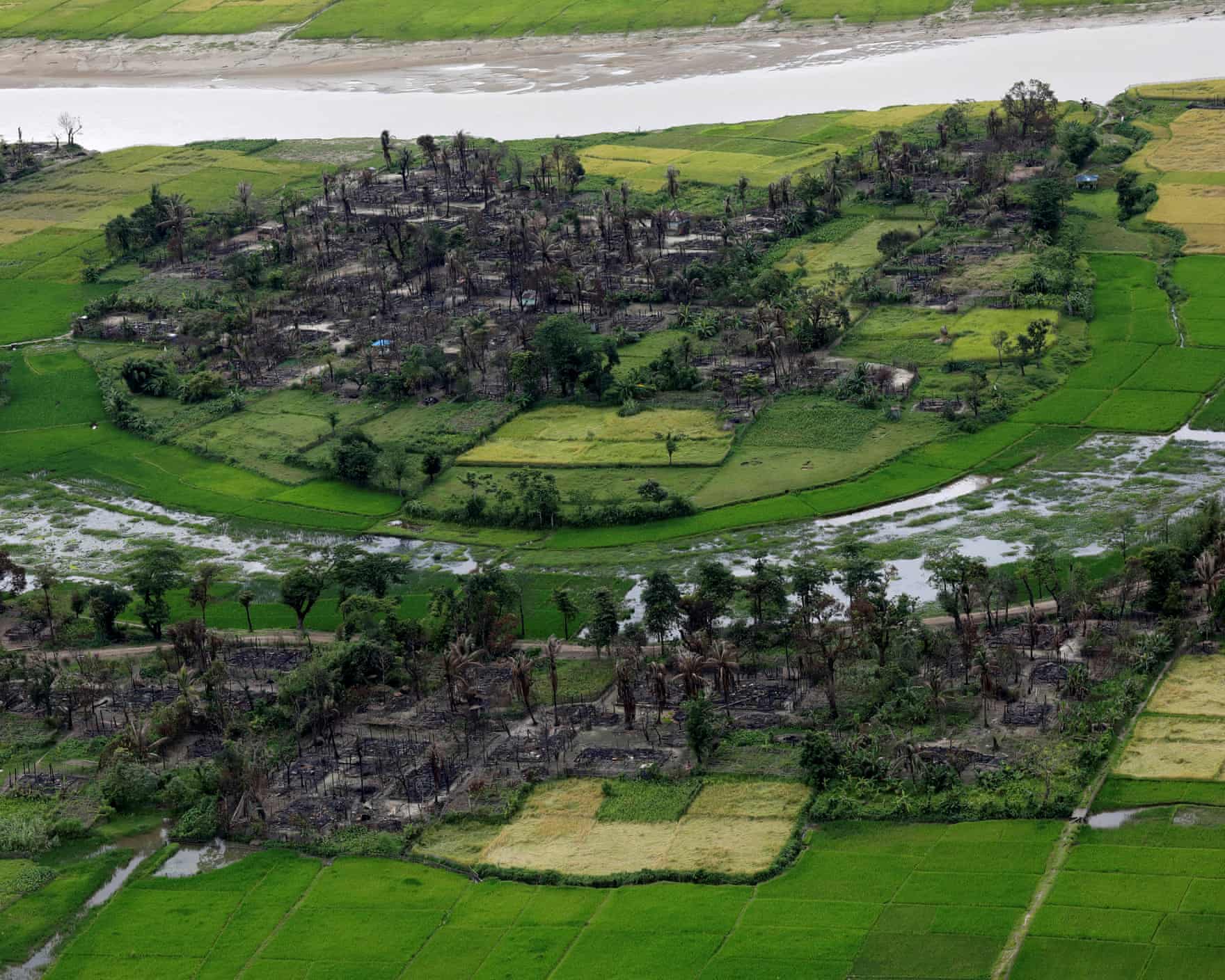
    Aerial view of a burnt Rohingya village near Maungdaw in Myanmar in September 2017.

    The international court of justice (ICJ) said it was not enough to say they had faced ethnic cleansing when soldiers had also killed those trying to escape – Myanmar was trying to destroy the group as a people.

    Stories of that violence in 2017, of organised mass killing, sexual attacks and the complete destruction of their villages, came with the refugees who arrived in neighbouring Bangladesh, eventually numbering more than 700,000 and settling in what has become the world’s largest refugee camp.

    For months, they would arrive from places such as Tula Toli, where thousands were rounded up, killed and buried in mass graves. In other villages, men were captured and killed by the security forces.

    Many survivors had escaped an attack on their own village, only to watch their relatives being killed in the villages where they had sought safety.

    Almost a decade later, the majority of Rohingya who arrived in 2017 remain in the refugee camps, joining those who had already been there since the early 1990s, having escaped previous military operations and ever-increasing persecution.

    The ICJ ruling has come at a particularly harsh time for Rohingya refugees, in a year in which hundreds have died at sea trying to escape the refugee camps, and in which countries such as Malaysia and India have spoken about returning the Rohingya to Myanmar.

    Rohingya campaigners are hoping that this ruling will put an end to that.
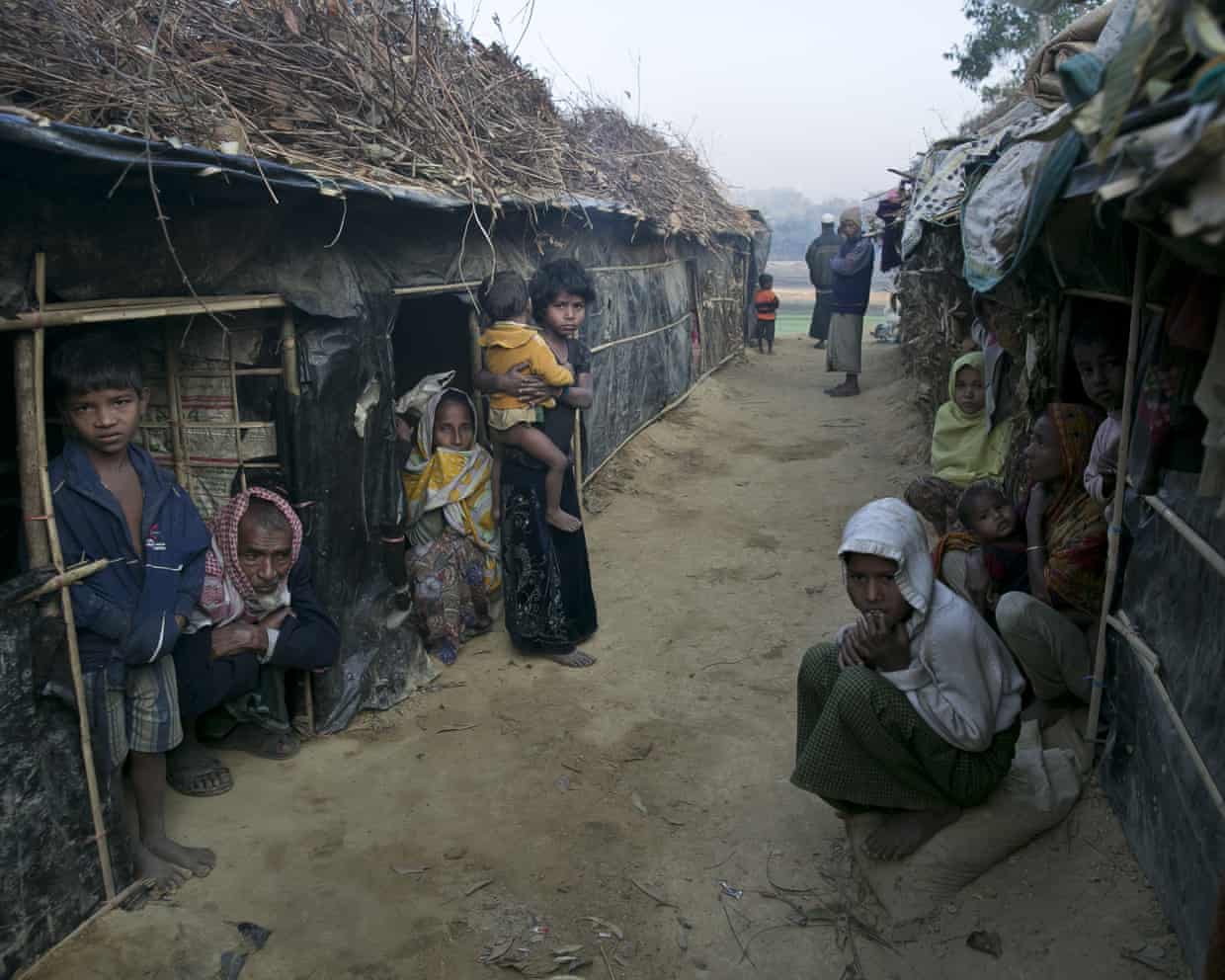
    Rohingya refugees in Kutapalong camp in Cox’s Bazar, Bangladesh, in 2017.

    Rohingya refugees still live in fragile shelters made of bamboo and tarpaulin sheets. They are denied the right to leave the camps, to work or to seek education.

    Below are some of the stories from Rohingya who arrived in Bangladesh in 2017, having escaped Tula Toli and the surrounding area.

    Momtaz and Dildar Begum
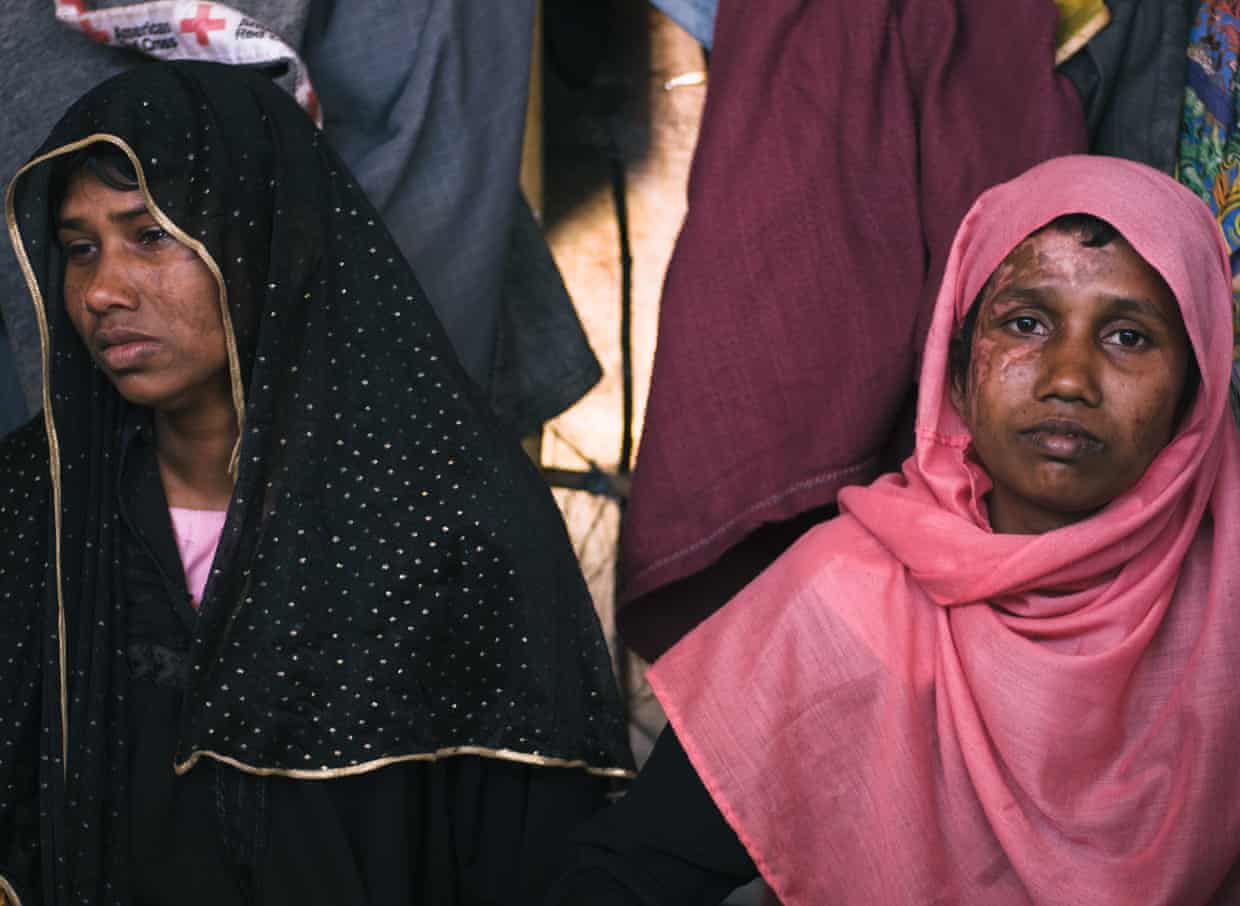
    Sisters Dildar Begum (left) and Momtaz Begum.
    Sisters Dildar Begum (left) and Momtaz Begum. Photograph: Kaamil Ahmed/The Guardian

    Sitting in the background, almost unnoticed as Momtaz Begum recollected how Myanmar forces had killed her husband and children and then raped her in front of her lone surviving child, was a woman who seemed to know every word of the story.

    It was not because she had heard it before. Dildar Begum had experienced exactly the same violence as her sister had, in their village, Tula Toli.

    In fact, they had for months believed each other dead until they discovered that they had both made it to Bangladesh and lived in different parts of the camp.

    Each had only one surviving daughter, both of whom had similar scars along the back of their heads.

    Anwara Begum
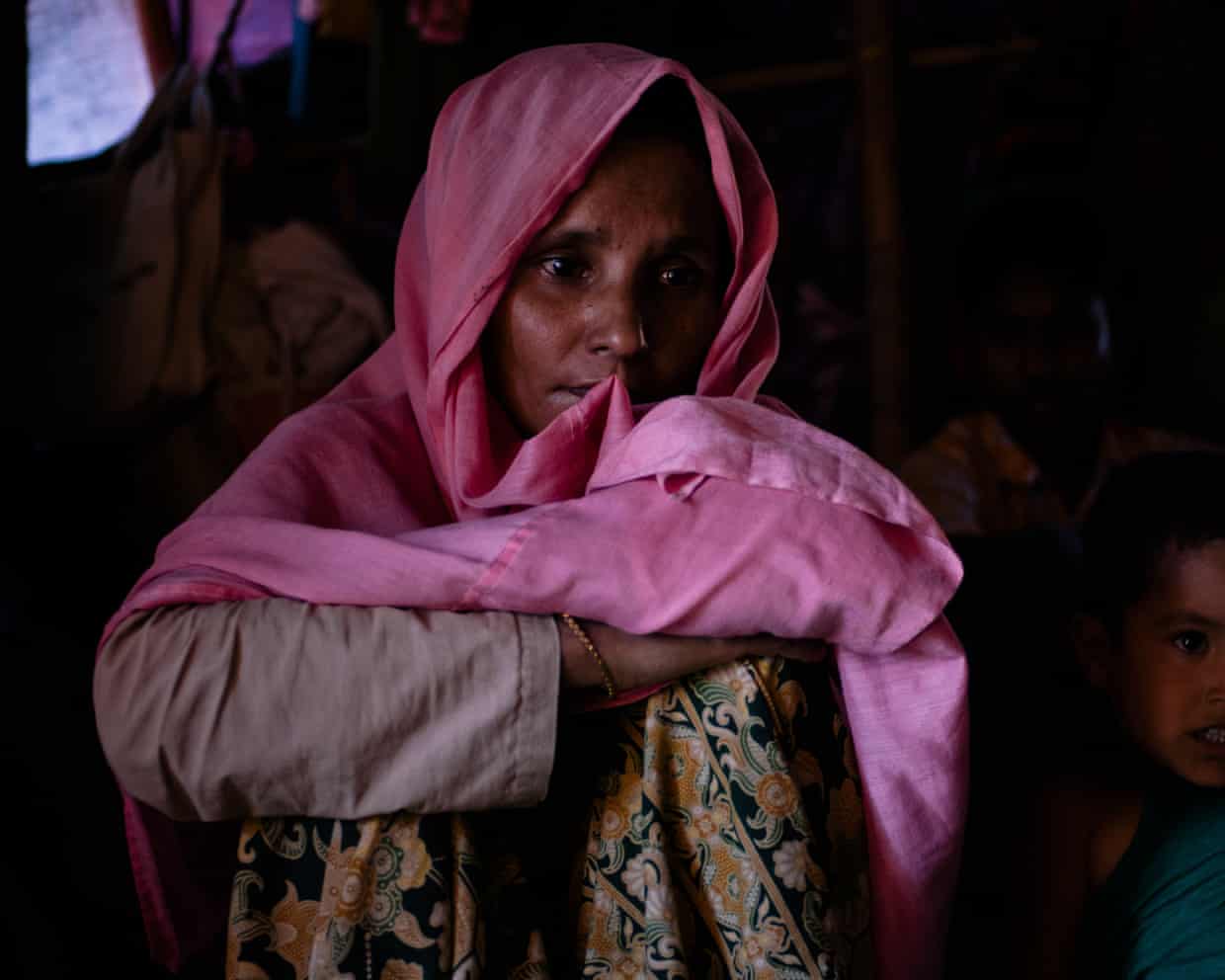
    Anwara Begum in the Cox’s Bazar refugee camp, Bangladesh.
    Anwara Begum in the Cox’s Bazar refugee camp, Bangladesh. Photograph: Kaamil Ahmed/The Guardian

    Twice previously Anwara Begum had lived as a refugee in Bangladesh. Once as a child in 1978 and then again in the early 1990s, as a young mother who lost her son to a respiratory disease during a rainy season spent in a flimsy tent.

    When she was forced to return to Myanmar, though the persecution she fled there had not stopped, Anwara swore to herself that she would never become a refugee again.

    She broke that oath when she saw the river by her village filled with bodies floating from Tula Toli.

    Her husband first pulled from the river as many bodies as he could to bury and then they gathered some belongings and headed westwards to the River Naf – the border with Bangladesh.

    To cross, she handed over all the gold she owned, equal to US $200 (£150), to a Bangladeshi boatman.

    Nur Alam
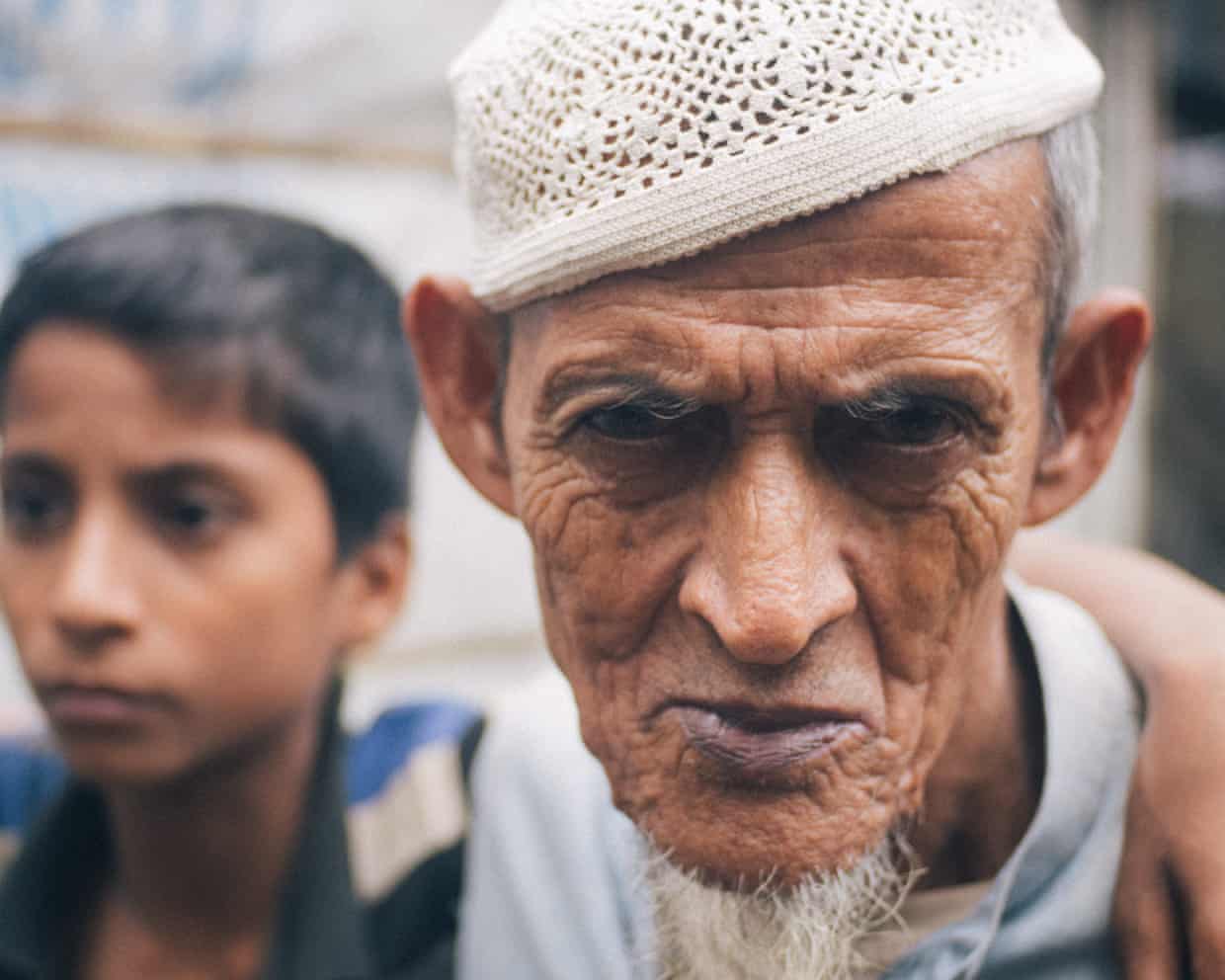
    Nur Alam, an elderly Rohingya man.
    Nur Alam has been a refugee in Bangladesh four times over his life. Photograph: Kaamil Ahmed/The Guardian

    Elderly people were not spared the Myanmar military’s attacks. Like so many others, Nur Alam had to be carried on the shoulders of his children on his journey to Bangladesh.

    His 10-year-old grandson, Mamoon, held his hand. Once in the camp, they stuck to each other.

    Alam’s arrival in Bangladesh was his fourth time being a refugee there. He was first expelled from Myanmar – known as Burma until 1989 – during military operations in the 1950s when Bangladesh was not yet an independent country.

    Explore more on these topicsReuse this content

    Source: www.theguardian.com

    Bangladesh International court of justice International law Migration Myanmar Refugees Rohingya South and central Asia War crimes World news
    Share. Facebook Twitter Pinterest LinkedIn Tumblr Telegram Email
    Peter Novak
    • Website

    Related Posts

    Kenya’s internet metering bill raises privacy and affordability concerns

    November 22, 2026

    South Korea education minister resigns after AI cheating scandal engulfs university exams

    November 22, 2026

    Fred Nile, former NSW politician and figurehead of the rightwing Christian Democratic party, dies aged 92

    November 22, 2026
    Leave A Reply Cancel Reply

    WARSAW WEATHER
    Economy News
    News

    Madeira’s marine reserves are working

    By Peter NovakNovember 22, 20260

    Madeira’s waters sit at an ecological crossroads in the North-East Atlantic. Migrating whales, seabirds and turtles pass through, and the archipelago is home to cold-water corals and one of the world’s rarest seals. Yet large stretches of the sea around the Portuguese islands have never been properly studied.

    Mężczyzna “stawia na swoim”, a kobieta…

    November 22, 2026

    Kenya’s internet metering bill raises privacy and affordability concerns

    November 22, 2026
    Top Trending
    Culture

    Jest wyrok dla Duane’a Davisa. To on odpowiada za śmierć Tupaca

    By Peter NovakOctober 13, 20260

    Duane „Keffe D” Davis został 31 sierpnia uznany przez ławę przysięgłych za winnego zabójstwa pierwszego stopnia z użyciem broni palnej, w związku z organizacją zamachu na rapera. Dziś sąd w Las Vegas zdecydował, że Davis spędzi w więzieniu minimum 40 lat. Od tej kary należy odjąć 731 dni, które oskarżony spędził w areszcie. Oznacza to,…

    Technology

    Exclusive: Cambridge Heavy Industries has been quietly building a desktop fusion device

    By Peter NovakOctober 13, 20260

    Fusion power usually conjures images of massive industrial facilities laced with large lasers or magnets, but a startup in Cambridge, Massachusetts, has been quietly building a device that can fit on a tabletop.

    News

    Cornell University suspends frat parties over gang rape allegations

    By Peter NovakOctober 13, 20260

    Cornell University in the US has suspended all fraternity parties amid mounting backlash over its handling of an alleged gang rape at a frat house in 2024.

    Subscribe to News

    Subscribe to receive the latest breaking news, local updates, and top stories from Warsaw delivered to your inbox.

    Warsaw.Today is your trusted source for breaking news, local updates, business, politics, technology, sports, culture, and events from Warsaw, Poland—all in one place.

    Facebook X (Twitter) Instagram Pinterest YouTube

    Madeira’s marine reserves are working

    November 22, 2026

    Mężczyzna “stawia na swoim”, a kobieta…

    November 22, 2026

    Kenya’s internet metering bill raises privacy and affordability concerns

    November 22, 2026

    Subscribe to Updates

    Subscribe to receive the latest breaking news, local updates, and top stories from Warsaw delivered to your inbox.

    © 2026 ThemeSphere. Designed by ThemeSphere.
    • About Us
    • Get In Touch
    • Disclaimer
    • Privacy Policy
    • Terms and Conditions

    Type above and press Enter to search. Press Esc to cancel.