



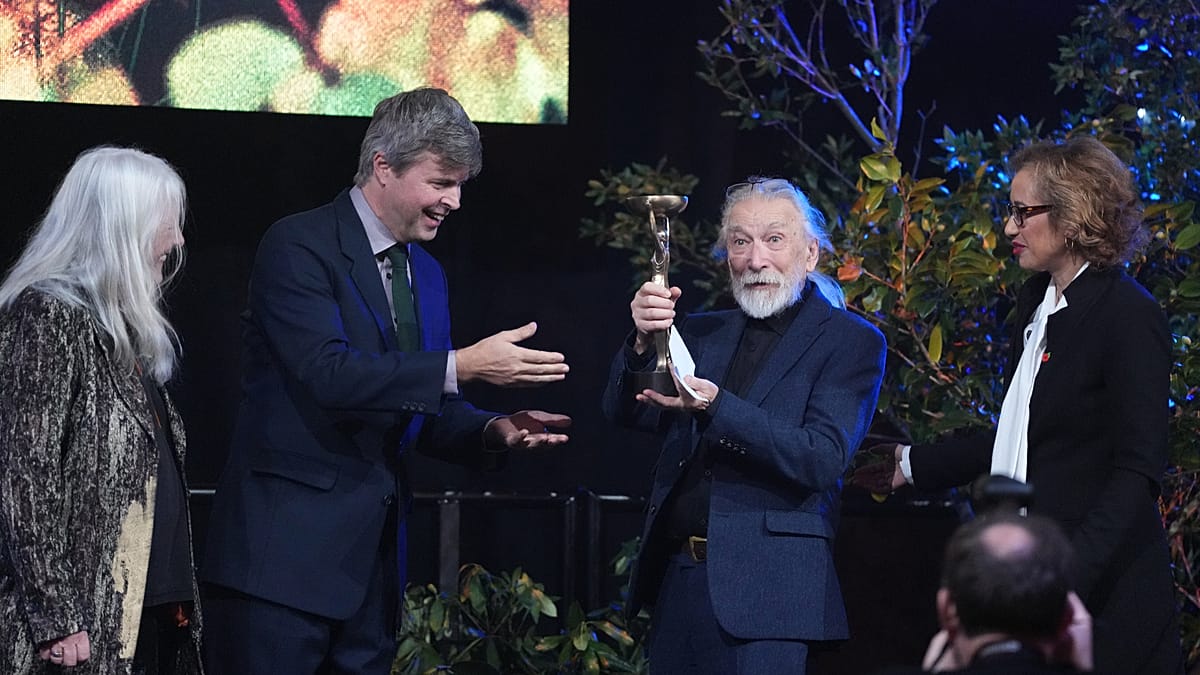
The judges of the prestigious English literary prize praised the novel for it’s “extraordinary expert writing and huge ambition” – Harrison is the oldest ever recipient of the prize that is famed for kickstarting careers and says he feels like a proper writer at last.
At a ceremony in London the winner of the most prestigious literary award in Britain was announced by the classicist Mary Beard, the chair of the judging panel which also included pop musician Jarvis Cocker.
The End of Everything is set on England’s Channel coast in the near future, after an unspecified calamity has shattered society and brought an influx of enigmatic alien entities to Britain. It centers on a beachcomber who lives with his gun-toting aunt and discovers a puzzling, shapeshifting artifact on the shore.
Mary Beard said the book is “the politics of now seen through the lens of the future,” and about a society “undergoing a catastrophe that they don’t really understand.”
Harrison said before he won that he had been “working for 40 to 50 years to shift the balance, both as a novelist and as a critic. Why shouldn’t a well-written (work of science fiction) be considered to be literary fiction?”
This year’s shortlist – 6 novels whittled down from a longlist of 163 – was a typically mixed bag of fiction. It included two former winners, Marlon James from Jamaica and Scot Douglas Stewart. A win by either one would have made that author the fifth double Booker winner, after J.M. Coetzee, Peter Carey, Hilary Mantel and Margaret Atwood.
Pulitzer Prize winner Elizabeth Strout was also on the shortlist, as were Luke Kennard’s satirical campus novel Black Bag; and Rebecca Perry’s Medieval-to-modern tale May We Feed the King.
Founded in 1969, the Booker Prize is open to novels written in English from any country published in the U.K. and Ireland. It has a reputation for transforming writers’ careers.
Its winners have included Salman Rushdie, Ian McEwan, Bernardine Evaristo and Arundhati Roy. Last year’s prize went to “Flesh” by Hungarian-British writer David Szalay.
Source: www.euronews.com
