


Close Menu
Warsaw.Today
    What's Hot

    Vulnerability that lets hackers SSH into Linux devices is under active exploitation

    November 9, 2026

    Korean Air: San Francisco – Bangkok, Thailand. $777. Roundtrip, including all Taxes

    November 9, 2026

    ‘Settle down’, ‘do your own swabs’: how alleged rape victims are treated in Queensland revealed in major report

    November 9, 2026
    Facebook X (Twitter) Instagram
    Trending
    • Vulnerability that lets hackers SSH into Linux devices is under active exploitation
    • Korean Air: San Francisco – Bangkok, Thailand. $777. Roundtrip, including all Taxes
    • ‘Settle down’, ‘do your own swabs’: how alleged rape victims are treated in Queensland revealed in major report
    • Norway dropped from junior hockey championship to make room for Russia
    • YouTube streaming data returns to Billboard charts, ending major disagreement
    • Jurassic Jungle Boat Ride in Pigeon Forge, Tennessee
    • Air pollution soars as fog traps emissions in England’s urban areas
    • Robots, AI agents and a Nvidia probe: Web Summit 2026 Opens in Lisbon
    Facebook X (Twitter) Instagram
    Warsaw.TodayWarsaw.Today
    Demo
    • Home
    • News
    • World
    • Sports
    • Business
    • Culture
    • Politics
    • Travel
    • Technology
    Warsaw.Today
    Home»World»UK spent £100m on zombie Brexit border inspection posts
    World

    UK spent £100m on zombie Brexit border inspection posts

    Peter NovakBy Peter NovakNovember 8, 20261 Comment0 Views
    Facebook Twitter Pinterest LinkedIn WhatsApp Reddit Tumblr Email
    Share
    Facebook Twitter LinkedIn Pinterest Email

    Five of seven facilities in England and Wales never reached operational stage as Tories vacillated over plans to check goods

    The UK wasted at least £100m in taxpayers’ money to set up zombie Brexit border inspection posts that were never used, it has been revealed.

    The overall cost of Brexit was put at an estimated £4.7bn by the National Audit Office last year but this included years-long transformation of the software used for customs declarations and other systems built to cope with the UK leaving the single market.

    Now fresh information from HMRC on the exact spend on the seven “inland border facilities” has come to light. The sites were built but quickly decommissioned as the Conservative government at the time vacillated over plans to check goods coming in from the continent.

    Five of the seven “inland border facilities” in England and Wales never got to operational stage because the Tories decided not to implement all the border checks after concluding food coming from the EU would be the same high standard as it was before Brexit.
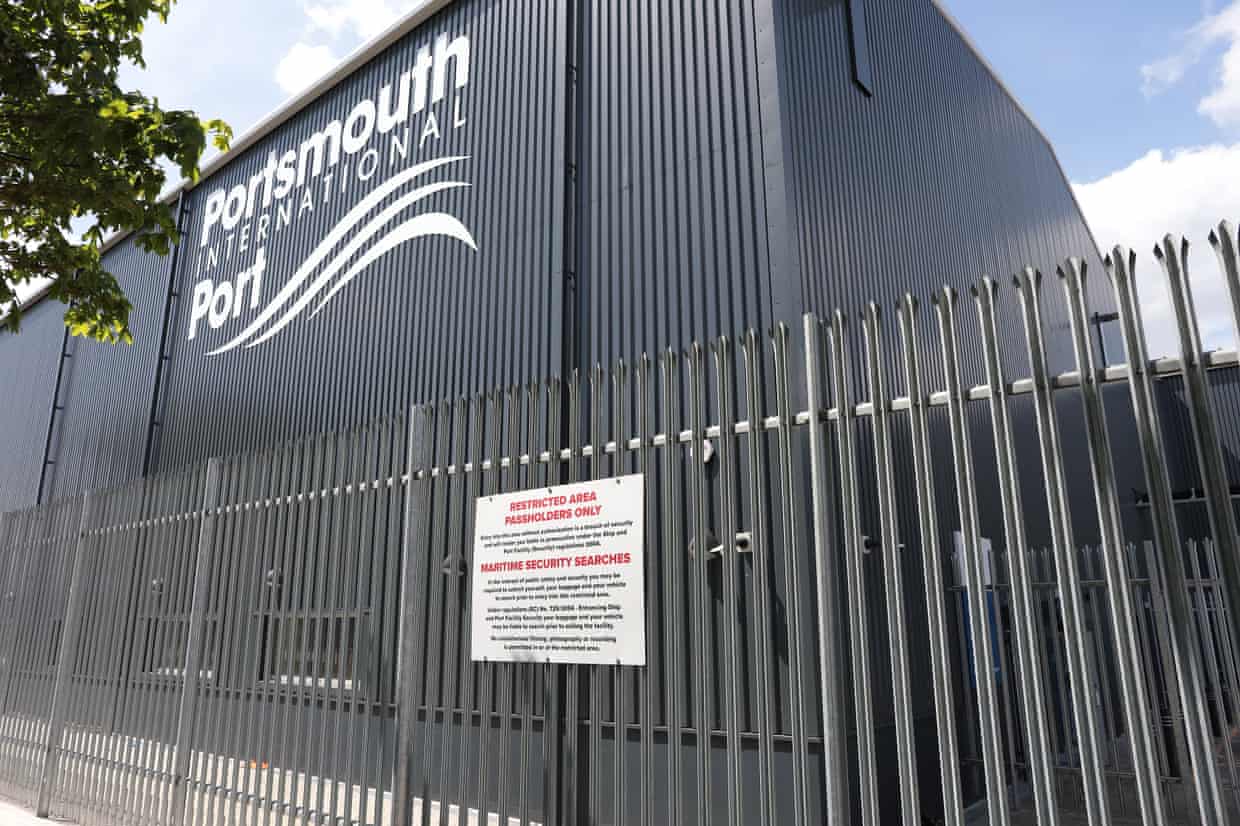
    A security fence in front of Portsmouth International Port’s large grey corrugated building
    Portsmouth port, which is owned by the city council, spent £23m on building its border control facility. It has never been used at full capacity. Photograph: Martin Godwin/The Guardian

    Portsmouth port, which is owned by the city council, spent £23m on building its border control post, which has never been used at full capacity because of the decision to scale back the checks.

    The port received £17.1m in government funding for the project, leaving the council to make up the £6m shortfall, which could otherwise have been spent on essential services.

    The EU launched all the checks in Calais, Dublin and other European ports from day one as the UK was treated as a “third country” overnight. The most controversial British zombie facility was known as “Dover white cliffs”. Furious residents at the village of Guston were told of the plans for the inland border facility on 31 December 2020, just hours before a “transition year” ended and Brexit was due to be implemented with supposed checks on all lorries coming across the Channel.

    Information from HMRC, released under a freedom of information request, shows the facility has so far cost the taxpayer £28m, even though it remains a field. The Department for Transport paid £21m to procure the site and spent a further £7m on initial ground works, including an archaeological survey for any roman remains.
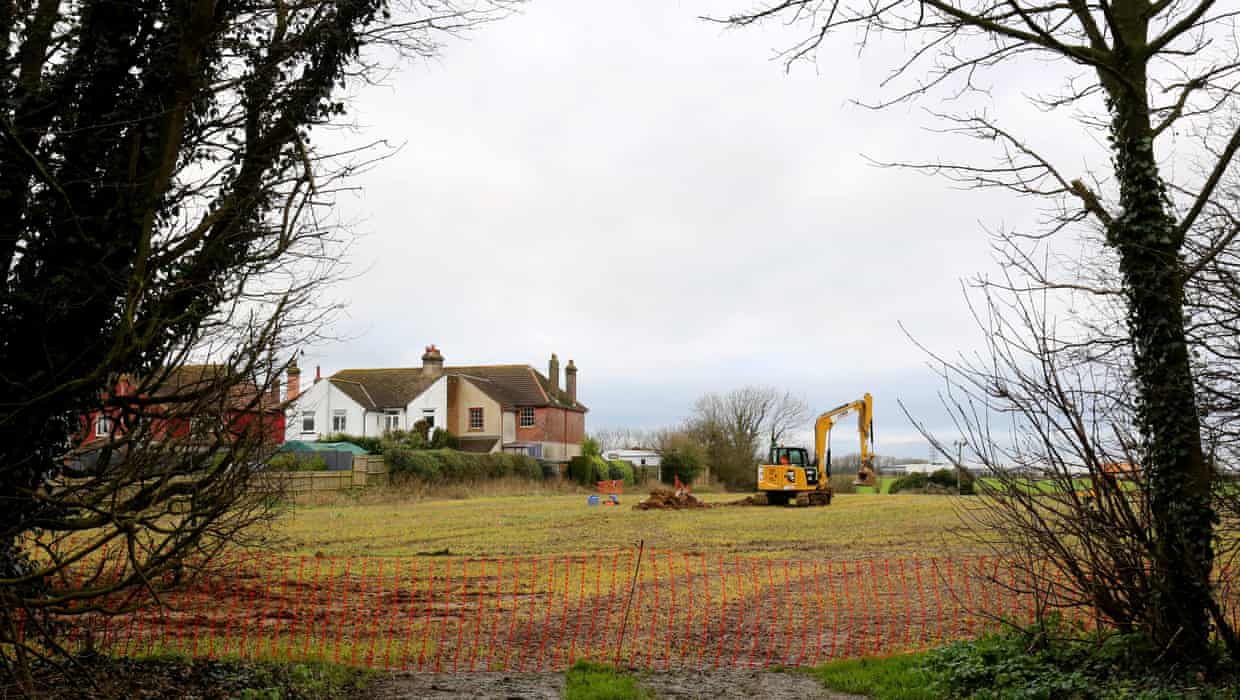
    A digger works in a field in Guston, Kent, for a planned lorry park
    A site in Guston near Dover, Kent, cost £21m to procure and £7m for ground works, but remains a field. Photograph: Gareth Fuller/PA

    Another £17m was spent on a border facility in Birmingham planned at the airport car park. Newly released information shows it cost £11m to build with £6m in “closure costs”.

    Another £20m was spent on sites in Warrington and in Ebbsfleet, a town just south of the Dartford Bridge on the Thames estuary. The Warrington site, on the former Shearings holidays coach stop at Appleton Thorn, was chosen because there were no suitable sites available for lorries coming from Ireland into Liverpool, Holyhead and Heysham ports.

    Local people vehemently opposed the site at the time. It cost £7m to buy, £9m to build and £1m to decommission.

    Another £10m was spent preparing customs and other checks at the former car park at Eurostar Ebbsfleet International train station, which cost £4m to convert into a lorry park and £6m to close

    A further £5m was spent on another site tucked away off the M11, just south of Stansted, at North Weald airfield. This airfield was commandeered for the same purpose, to avert congestion on the M25. It cost £3m to build and £2m to close down.

    HMRC said Birmingham, Ebbsfleet and North Weald “did not require the acquisition of land”. The decision to build Brexit lorry parks so far from Dover underlined the lack of preparation for the UK’s departure from the EU.

    Most of the UK’s lorry traffic is concentrated in Dover, but as a designated area of outstanding beauty it was impossible to conduct the post-Brexit customs and standard checks near the port.
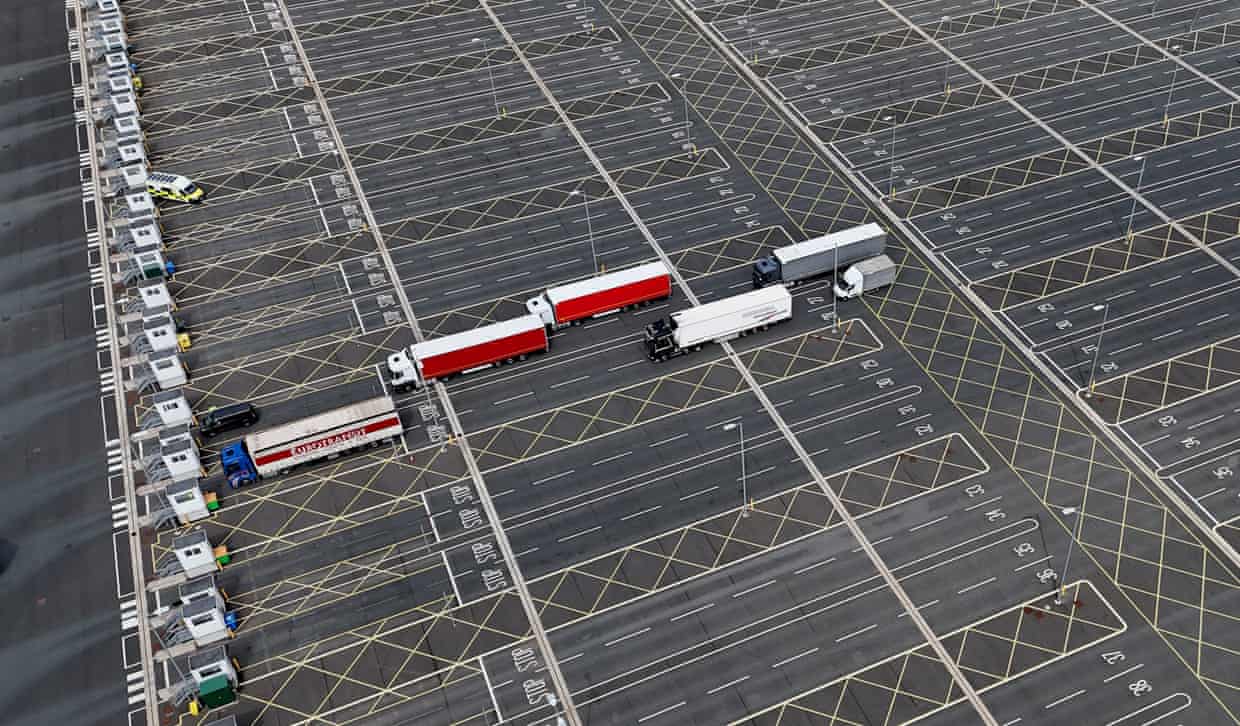
    Aerial view of five lorries at border checkpoint booths at Sevington, Kent
    Costs for the Sevington inland border facility in Kent ran to £154m. Photograph: Gareth Fuller/PA

    The UK finally opted for a site 20 miles inland at Sevington in Kent, but even that was last minute. The government previously revealed in a parliamentary question that total capital costs ran to £154m.

    This included £30m on the acquisition of farmland between Sevington and Mersham for Britain’s principal Brexit border facility and another £70m to build.

    HMRC has revealed through freedom of information that the operational costs have run to £179m, money that would not have been spent had Brexit not happened.

    The second site that remains operational is Holyhead – a small site close to the main road to the port which receives goods from Ireland. According to the FoI, the site cost £14m to acquire and another £23m to build.

    The figures are separate to investments made by Eurotunnel, the Port of Dover and other ports including Portsmouth. Eurotunnel spent €50m (£41.7m) on building the infrastructure for Brexit checks for trucks and €90m on changes for passengers, including an entry and exit system that has never been activated by the French.
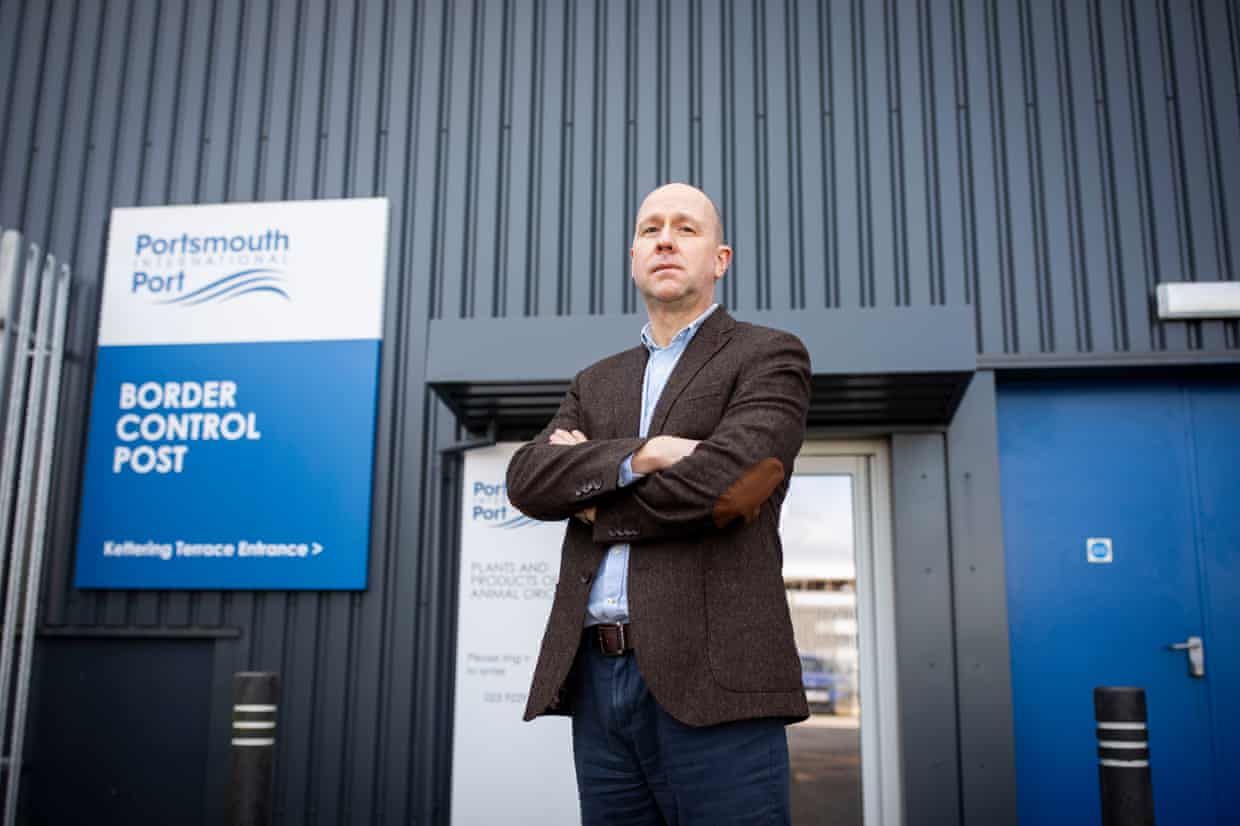
    Mike Sellers, port director, stands arms crossed outside Portsmouth’s Border Control Post
    Mike Sellers, Portsmouth port’s director, said only two trailer checks take place on average each day at the border control post. Photograph: Alicia Canter/The Guardian

    The £23m border control post at Portsmouth, the UK’s second-busiest cross-Channel port, now faces an uncertain future. The hi-tech facility was built to government specifications to handle post-Brexit checks. Two trailer checks take place on average each day, according to the port’s director, Mike Sellers, compared with the 80 checks originally envisioned.

    He said: “Given the border post’s location within the operational port, ideally we would look to repurpose it rather than demolish it, but it will cost us almost as much to repurpose as to demolish. It was bespoke and built for food import checks and biosecurity, it is not suitable for general warehousing and will have to be changed.”

    Sellers and Portsmouth city council’s leader are among the ports calling on the government to provide compensation for the border posts that will become redundant when the UK government’s deal with the EU comes into force.

    Explore more on these topicsReuse this content

    Source: www.theguardian.com

    Brexit Business England Europe European Union Food & drink industry Foreign policy HMRC International trade Politics Portsmouth Trade policy UK news World news
    Share. Facebook Twitter Pinterest LinkedIn Tumblr Telegram Email
    Peter Novak
    • Website

    Related Posts

    ‘Settle down’, ‘do your own swabs’: how alleged rape victims are treated in Queensland revealed in major report

    November 9, 2026

    Air pollution soars as fog traps emissions in England’s urban areas

    November 9, 2026

    Witnesses recount struggle to save people buried in ‘horrifying’ Gaza landslide

    November 9, 2026

    1 Comment

    1. Pingback: Collision of two trains in Egypt kills at least seven - Warsaw.Today

    Leave A Reply Cancel Reply

    WARSAW WEATHER
    Economy News
    Technology

    Vulnerability that lets hackers SSH into Linux devices is under active exploitation

    By Peter NovakNovember 9, 20260

    Hackers are actively exploiting a recently discovered critical vulnerability that allows them to log in to privileged accounts on many Linux systems, multiple researchers are reporting.

    Korean Air: San Francisco – Bangkok, Thailand. $777. Roundtrip, including all Taxes

    November 9, 2026

    ‘Settle down’, ‘do your own swabs’: how alleged rape victims are treated in Queensland revealed in major report

    November 9, 2026
    Top Trending
    Travel

    American: Boston – Rio de Janeiro, Brazil. $548 (Basic Economy / $708 (Regular Economy). Roundtrip, including all Taxes

    By Peter NovakOctober 6, 20260

    American’s $708 fare is a regular economy fare with ONE checked bag and normal size carry-on included

    Technology

    Type One Energy raised $200M to build a fusion power plant by 2034

    By Peter NovakOctober 6, 20260

    Type One Energy, a Knoxville, Tennessee-based startup founded in 2019 to build fusion power plants, announced Tuesday morning that it has raised $200 million from investors.

    News

    Historic Tashkent madrasah becomes runway for Brunello Cucinelli

    By Peter NovakOctober 6, 20260

    Handmade carpets covered the courtyard of one of Tashkent’s historic madrasahs as Italian fashion house Brunello Cucinelli presented its Fall-Winter 2026 collection in the Uzbek capital.

    Subscribe to News

    Subscribe to receive the latest breaking news, local updates, and top stories from Warsaw delivered to your inbox.

    Warsaw.Today is your trusted source for breaking news, local updates, business, politics, technology, sports, culture, and events from Warsaw, Poland—all in one place.

    Facebook X (Twitter) Instagram Pinterest YouTube

    Vulnerability that lets hackers SSH into Linux devices is under active exploitation

    November 9, 2026

    Korean Air: San Francisco – Bangkok, Thailand. $777. Roundtrip, including all Taxes

    November 9, 2026

    ‘Settle down’, ‘do your own swabs’: how alleged rape victims are treated in Queensland revealed in major report

    November 9, 2026

    Subscribe to Updates

    Subscribe to receive the latest breaking news, local updates, and top stories from Warsaw delivered to your inbox.

    © 2026 ThemeSphere. Designed by ThemeSphere.
    • About Us
    • Get In Touch
    • Disclaimer
    • Privacy Policy
    • Terms and Conditions

    Type above and press Enter to search. Press Esc to cancel.