


Close Menu
Warsaw.Today
    What's Hot

    Zelenskyy appears to mock Witkoff for his praise for ‘humanitarian’ Putin after Kyiv attacks

    October 22, 2026

    Refusing to cross, cannot escape: Seafarers recount Hormuz dangers

    October 22, 2026

    Beau Lamarre-Condon visits McDonald’s drive-thru in van allegedly used to dispose of bodies, in CCTV shown to jury

    October 22, 2026
    Facebook X (Twitter) Instagram
    Trending
    • Zelenskyy appears to mock Witkoff for his praise for ‘humanitarian’ Putin after Kyiv attacks
    • Refusing to cross, cannot escape: Seafarers recount Hormuz dangers
    • Beau Lamarre-Condon visits McDonald’s drive-thru in van allegedly used to dispose of bodies, in CCTV shown to jury
    • Italy’s truckers’ protests leave supermarket shelves empty
    • Can Russia broker a new US-Iran deal?
    • Did Slow Horses’ season finale cliffhanger give us a major James Bond casting clue?
    • US universities are failing to protect victims of sexual assault
    • Three inflation realities. Why Europe’s price shock is so uneven
    Facebook X (Twitter) Instagram
    Warsaw.TodayWarsaw.Today
    Demo
    • Home
    • News
    • World
    • Sports
    • Business
    • Culture
    • Politics
    • Travel
    • Technology
    Warsaw.Today
    Home»News»How a laboratory accident revealed a new way to rescue dying corals
    News

    How a laboratory accident revealed a new way to rescue dying corals

    Peter NovakBy Peter NovakOctober 15, 2026No Comments0 Views
    Facebook Twitter Pinterest LinkedIn WhatsApp Reddit Tumblr Email
    How a laboratory accident revealed a new way to rescue dying corals
    Share
    Facebook Twitter LinkedIn Pinterest Email

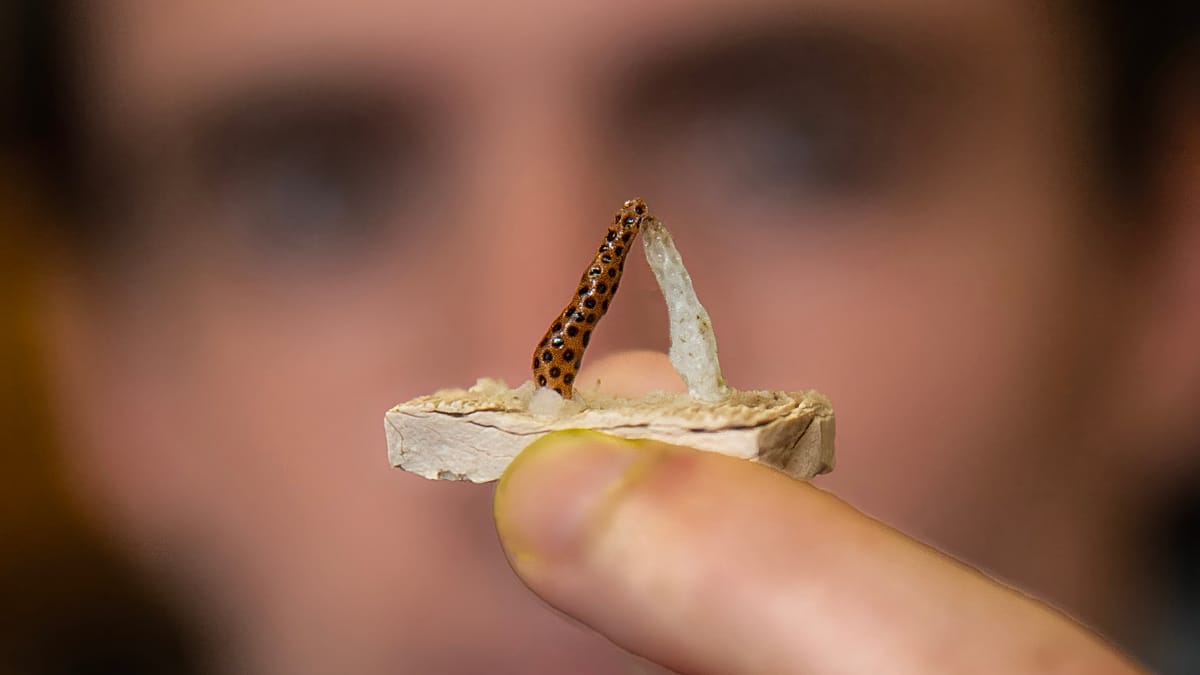
    In the lab, bleached corals recovered within just seven weeks of being put in brief contact with healthy corals.

    Dying corals may have found an unexpected lifeline: their neighbours.

    Scientists at Stanford University have discovered a way to bring corals back from the brink of death by placing them in contact with healthy corals for just a few days.

    Published in Science Advances, the study presents a promising new approach to restoring coral reefs as rising sea temperatures cause more frequent and severe coral bleaching events.

    When water becomes too hot, corals expel the microscopic algae that provide much of their energy, an event known as bleaching, which leaves them vulnerable to starvation.

    After bleaching events, it can take months or years for surviving corals to recover – but the scientists contend hope is not lost for them.

    “While bleached corals may be dying, they are not dead yet,” says lead author Danny Collins, a PhD student at Stanford. “The question we wanted to answer is, once a coral has bleached, what can we do?”

    How scientists brought bleached corals back to full strength

    The discovery happened by accident in 2025, when Steve Palumbi, a professor of oceans and marine biologist at Stanford’s Doerr School of Sustainability, noticed two pieces of coral that had fallen against each other in a laboratory tank. One was healthy while the other was bleached. But where the two touched, the bleached coral was beginning to regain its colour.

    Collins then arranged 10 pairs of coral fragments, each containing a healthy and bleached piece from the same colony. Five pairs were placed in contact with one another, and the others were kept a few millimetres apart.

    Within seven weeks, all five bleached fragments put in contact with their healthy clones had recovered. The ones that were kept apart had died.

    Under a microscope, the scientists discovered the corals had fused together, creating tiny channels that allowed algae and nutrients to pass from one to the other. Within three days, beneficial algae had begun moving from the healthy corals into the bleached ones. After about a week, some had received enough algae to recover on their own.

    Once inside the damaged corals, the beneficial algae began multiplying rapidly. “They flood in and start dividing at the fastest rates seen in corals,” says Palumbi.

    During the second week, the algae doubled in number every four days – about 10 times faster than in wild corals – allowing the damaged corals to continue recovering even after they were separated from the healthy ones.

    The finding marked a breakthrough in the lab. “Bleached corals are often considered a lost cause because recovery after a heatwave is very slow, if it happens at all,” says Fiorenza Micheli, a Stanford professor and one of Collins’ faculty advisors.

    But the scientists say the technique isn’t ready for wide-scale application in the oceans.

    The corals must be genetically identical for their tissues to fuse. In other words, every damaged coral would need a healthy copy of itself – an impractical solution for restoring whole reefs. But the researchers hope to find ways to deliver the beneficial algae without requiring direct contact or identical twins.

    Coral reefs may be running out of recovery time

    The revelation comes at a crucial time for coral reefs.

    According to the Global Coral Reef Monitoring Network’s latest assessment, the world‘s reefs have lost nearly 10 per cent of their living coral over the past four decades. Between 2023 and 2024 alone, it fell almost 9 per cent during a global bleaching event – the largest single-year decline ever recorded.

    Global bleaching now occurs roughly every five to six years, leaving reefs less time to recover between bouts of extreme heat. The report warns that reefs will continue declining unless man-made emissions fall and threats such as overfishing, water pollution and coastal developments are curbed.

    And while combining coral to help them recover from bleaching might save some of them, Palumbi stresses that it can’t protect them from rising sea temperatures.

    “This is a recovery story. It doesn’t blunt heatwaves; it just helps the aftermath. There is still a huge need to reduce heatwaves and protect all of Earth’s life from rapid climate stress,” he says.

    “Eventually, it can hopefully help the huge effort being put into restoration succeed better by helping those coral gardens survive heatwaves more completely.”

    Source: www.euronews.com

    accident dying laboratory rescue revealed
    Share. Facebook Twitter Pinterest LinkedIn Tumblr Telegram Email
    Peter Novak
    • Website

    Related Posts

    Refusing to cross, cannot escape: Seafarers recount Hormuz dangers

    October 22, 2026

    Italy’s truckers’ protests leave supermarket shelves empty

    October 22, 2026

    Did Slow Horses’ season finale cliffhanger give us a major James Bond casting clue?

    October 22, 2026
    Leave A Reply Cancel Reply

    WARSAW WEATHER
    Economy News

    Zelenskyy appears to mock Witkoff for his praise for ‘humanitarian’ Putin after Kyiv attacks

    By Peter NovakOctober 22, 20260

    Ukraine’s president Volodymyr Zelenskyy responded to overnight attacks on Kyiv with a dig at US peace envoy Steve Witkoff’s comments lauding Russia’s Vladimir Putin as “a humanitarian”.

    Refusing to cross, cannot escape: Seafarers recount Hormuz dangers

    October 22, 2026

    Beau Lamarre-Condon visits McDonald’s drive-thru in van allegedly used to dispose of bodies, in CCTV shown to jury

    October 22, 2026
    Top Trending
    World

    Switzerland’s neutrality vote is asking the wrong question

    By Peter NovakSeptember 25, 20260

    On September 27, Switzerland votes on whether to lock a stricter definition of neutrality into its constitution. The initiative would bar Switzerland from cooperating with a military alliance unless it were under military attack or such an attack were being prepared, and prevent it from imposing sanctions on a belligerent state unless those sanctions were…

    Technology

    Apple’s hyper-pricey M5 Ultra Mac Studio made me into a vibe coder

    By Peter NovakSeptember 25, 20260

    When Apple was using Intel processors and AMD GPUs, the idea of an expandable and upgradeable tower made sense. But Apple Silicon chips bring the CPU, GPU, and memory interface all under one roof in a way that makes that sort of upgradeability not just superfluous but impossible. At least not without breaking some of…

    News

    What is working and what is holding them back

    By Peter NovakSeptember 25, 20260

    This article was authored by Jens Teutrine, DACH representative (Germany, Austria and Switzerland) at the Consumer Choice Center, and a former Member of Germany’s Federal Parliament. The views expressed in this article are those of the author and do not necessarily reflect the official policy or positions of EU Tech Loop or Euronews.

    Subscribe to News

    Subscribe to receive the latest breaking news, local updates, and top stories from Warsaw delivered to your inbox.

    Warsaw.Today is your trusted source for breaking news, local updates, business, politics, technology, sports, culture, and events from Warsaw, Poland—all in one place.

    Facebook X (Twitter) Instagram Pinterest YouTube

    Zelenskyy appears to mock Witkoff for his praise for ‘humanitarian’ Putin after Kyiv attacks

    October 22, 2026

    Refusing to cross, cannot escape: Seafarers recount Hormuz dangers

    October 22, 2026

    Beau Lamarre-Condon visits McDonald’s drive-thru in van allegedly used to dispose of bodies, in CCTV shown to jury

    October 22, 2026

    Subscribe to Updates

    Subscribe to receive the latest breaking news, local updates, and top stories from Warsaw delivered to your inbox.

    © 2026 ThemeSphere. Designed by ThemeSphere.
    • About Us
    • Get In Touch
    • Disclaimer
    • Privacy Policy
    • Terms and Conditions

    Type above and press Enter to search. Press Esc to cancel.