


Close Menu
Warsaw.Today
    What's Hot

    Helen Haines has lost both legs after alleged attack but ‘her heart and mind are in good shape’, husband says

    October 21, 2026

    You can now book an entirely child-free holiday

    October 21, 2026

    Paris small businesses bear brunt of protest violence

    October 21, 2026
    Facebook X (Twitter) Instagram
    Trending
    • Helen Haines has lost both legs after alleged attack but ‘her heart and mind are in good shape’, husband says
    • You can now book an entirely child-free holiday
    • Paris small businesses bear brunt of protest violence
    • More Russians are settling in the EU with each year of war in Ukraine
    • LeBron James’s 76ers spoil Knicks’ opening night at Madison Square Garden
    • UK inflation jumps more than expected fuelling rate hike expectations
    • Europe is in trouble, and it is blaming Muslims
    • New Beatles attraction ‘to rival Graceland’ coming to Liverpool in 2028
    Facebook X (Twitter) Instagram
    Warsaw.TodayWarsaw.Today
    Demo
    • Home
    • News
    • World
    • Sports
    • Business
    • Culture
    • Politics
    • Travel
    • Technology
    Warsaw.Today
    Home»News»Germany marks 36 years of unity: Why was the country divided and how united is it today?
    News

    Germany marks 36 years of unity: Why was the country divided and how united is it today?

    Peter NovakBy Peter NovakOctober 3, 2026No Comments0 Views
    Facebook Twitter Pinterest LinkedIn WhatsApp Reddit Tumblr Email
    Germany marks 36 years of unity: Why was the country divided and how united is it today?
    Share
    Facebook Twitter LinkedIn Pinterest Email

    Only 17% of former GDR citizens kept their jobs after the change of system, a legacy still visible in regions short of people and corporate headquarters.

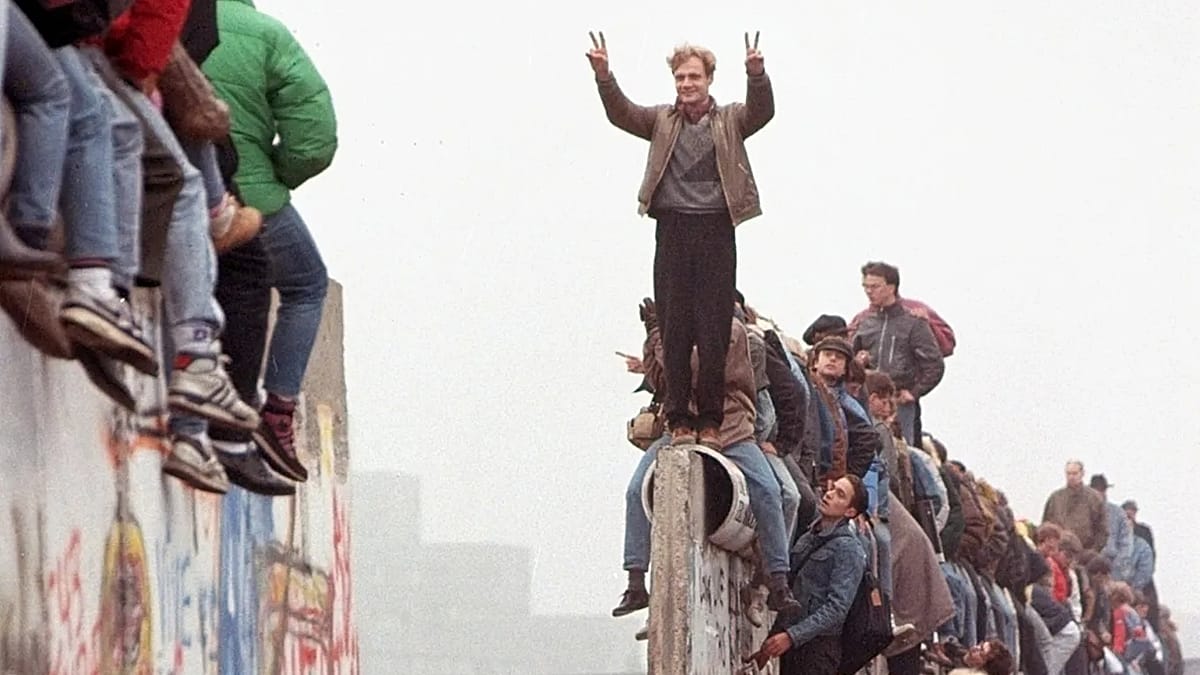
    Germany is marking the 36th anniversary of reunification. On 3 October 1990 the former GDR acceded to the Federal Republic, ending a division that had lasted 41 years and making Berlin once again the capital of a united Germany.

    In Brandenburg, Steeven Bretz, the leader of the Christian Democratic Union in the state parliament, paid tribute to former Chancellor Helmut Kohl at the Glienicke Bridge in Potsdam, where the border once ran. “We owe him a great deal, above all the fact that unity succeeded,” Bretz said, according to his Instagram account. “The fact that we are able to celebrate unity is, I believe, a gift of history.”

    The bridge, which links Berlin and Potsdam, was blown up in the final year of the Second World War, rebuilt and reopened in 1949 as the “Bridge of Unity”. It became famous during the Cold War as a site of international exchanges of agents. Brandenburg’s state government, led by Minister-President Dietmar Woidke (SPD), is taking part in the main national celebrations in Bremen.

    “A dream will come true”

    Kohl, whose term of office ran from 1982 to 1998, is regarded as the “chancellor of unity”. In a televised address on 2 October 1990, he said: “In a few hours a dream will come true. After more than forty bitter years of division, Germany, our fatherland, is reunited.”

    He urged Germans to remember those who had suffered under division. “Families were cruelly torn apart. Political prisoners were locked away in jails. People died at the Wall,” he said. He also thanked the East Germans who had fought for their freedom, the former victorious powers and the freedom movements in Central, Eastern and Southern Europe.

    German reunification is celebrating its 36th anniversary. On 3 October 1990 the former GDR acceded to the Federal Republic. The date also marks the end of the division of Germany, which had lasted a full 41 years.

    How united are Germans today?

    The 2026 report by the Federal Government Commissioner for Eastern Germany finds that East and West Germans now assess their living conditions similarly in many respects. Nevertheless, East Germans remain under-represented in senior positions in the top federal authorities, although their share has risen from 13.9 to 16.3 percent since 2022.

    The difference is particularly striking in inheritances and gifts: in 2025, 95 percent of the total value of taxable transfers of assets accrued to West Germany, according to the Federal Statistical Office.

    One reason lies in the upheaval that followed reunification. Only 17 percent of former GDR citizens kept their job after the change of system, according to a study by the Rockwool Foundation Berlin made available in advance to Reuters. Many companies in the former GDR lost their markets or were closed in the 1990s, while young and well-qualified people moved west. As a result, some regions still lack both population and corporate headquarters.

    The federal government is trying to reduce these disparities further, focusing support on structurally weak regions.

    Why Germany was divided

    After the Second World War, the four victorious powers, the USA, the Soviet Union, Great Britain and France, divided defeated Germany into four occupation zones. Against the backdrop of the emerging Cold War, a conflict developed over the country’s political and economic future, and in 1949 the Federal Republic of Germany (FRG) was established in the West and the GDR in the East.

    Both were granted sovereignty in 1955, West Germany by the Allies and East Germany by the Soviet Union, but the non-German powers retained special rights. Those rights ended with reunification, the foreign-policy conditions for which were laid down in the Two Plus Four Treaty. In it, the FRG and the GDR recognised the Oder-Neisse line as the border with Poland.

    Why 3 October, not 9 November

    The Wall fell on 9 November 1989, and that date was initially discussed as a possible national holiday. However, in view of the Reich Pogrom Night of 1938, the decision went against it. The choice fell instead on 3 October 1990, the day the Unification Treaty was implemented.

    The treaty, signed on 31 August 1990 by FRG Interior Minister Wolfgang Schäuble and GDR State Secretary Günther Krause, both of the CDU, designated 3 October as the “Day of German Unity” and a public holiday. It replaced 17 June, which commemorated the 1953 popular uprising in the GDR and remains a national day of remembrance.

    Source: www.euronews.com

    Country Germany marks unity years
    Share. Facebook Twitter Pinterest LinkedIn Tumblr Telegram Email
    Peter Novak
    • Website

    Related Posts

    You can now book an entirely child-free holiday

    October 21, 2026

    More Russians are settling in the EU with each year of war in Ukraine

    October 21, 2026

    UK inflation jumps more than expected fuelling rate hike expectations

    October 21, 2026
    Leave A Reply Cancel Reply

    WARSAW WEATHER
    Economy News

    Helen Haines has lost both legs after alleged attack but ‘her heart and mind are in good shape’, husband says

    By Peter NovakOctober 21, 20260

    Haines is in stable condition. Surgeons tried to save her right leg but both have now been amputated due to injuries

    You can now book an entirely child-free holiday

    October 21, 2026

    Paris small businesses bear brunt of protest violence

    October 21, 2026
    Top Trending
    World

    Costa Rica minister fired for unapproved meeting with Trump in US

    By Peter NovakSeptember 25, 20260

    Costa Rican President Laura Fernandez has fired Foreign Minister Manuel Tovar after he attended a US-led regional security summit with United States President Donald Trump without notifying her, an omission the government has said blocked her own participation and caused major strategic harm to the country’s interests.

    Travel

    Flight canceled or delayed? Here’s what to do next

    By Peter NovakSeptember 25, 20260

    Flight cancellations are on the rise in 2026. Since Jan. 1, U.S. carriers have canceled roughly 2% of all flights putting this year on pace for the highest cancellation rate since 2022. And delays remain common: About one in four departures nationwide was delayed between Memorial Day and Labor Day, according to data from aviation…

    Technology

    CDC opens state ordering for COVID-19 vaccines after unexplained delay

    By Peter NovakSeptember 25, 20260

    After a nearly monthlong delay, states are now able to order this season’s COVID-19 vaccines through a federal program that provides free immunizations to low-income children, the US health department says. Trump officials have still not provided a clear explanation for the delay, raising concerns about meddling from anti-vaccine Health Secretary Robert F. Kennedy Jr.

    Subscribe to News

    Subscribe to receive the latest breaking news, local updates, and top stories from Warsaw delivered to your inbox.

    Warsaw.Today is your trusted source for breaking news, local updates, business, politics, technology, sports, culture, and events from Warsaw, Poland—all in one place.

    Facebook X (Twitter) Instagram Pinterest YouTube

    Helen Haines has lost both legs after alleged attack but ‘her heart and mind are in good shape’, husband says

    October 21, 2026

    You can now book an entirely child-free holiday

    October 21, 2026

    Paris small businesses bear brunt of protest violence

    October 21, 2026

    Subscribe to Updates

    Subscribe to receive the latest breaking news, local updates, and top stories from Warsaw delivered to your inbox.

    © 2026 ThemeSphere. Designed by ThemeSphere.
    • About Us
    • Get In Touch
    • Disclaimer
    • Privacy Policy
    • Terms and Conditions

    Type above and press Enter to search. Press Esc to cancel.