

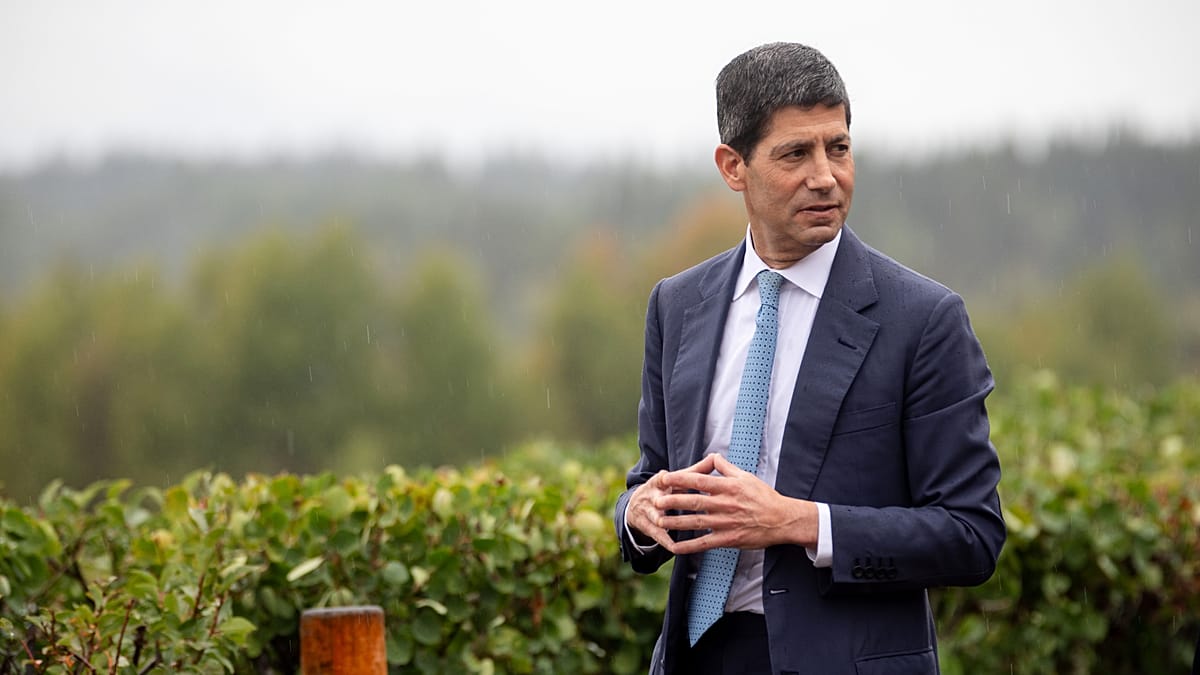
The US Federal Reserve is widely expected to raise borrowing costs for the first time in three years as persistent inflation tests Chair Kevin Warsh’s commitment to price stability.
Barely four months into the job, Federal Reserve Chair Kevin Warsh is caught between financial markets expecting an interest-rate increase and US President Donald Trump, who wants the central bank to cut borrowing costs or leave them unchanged.
Economists largely expect Warsh and his fellow policymakers to follow the market consensus when the Fed announces its decision on Wednesday.
Warsh has left himself little room to avoid an increase after warning at the Fed’s Jackson Hole conference in late August that inflation remained too far above the central bank’s 2% target.
Expectations of a rate rise strengthened after the latest inflation figures showed that price pressures remained stubbornly high. Futures markets put the probability of a quarter-point increase at around 90%.
Such a move would lift the Fed’s target range from 3.5%-3.75% to 3.75%-4%.
A test of the Fed’s credibility
Warsh faced a similar dilemma shortly after becoming chair on 22 May. Despite his tough rhetoric on inflation, the Fed left its key rate unchanged in July.
His subsequent press conference offered investors little clarity about how the central bank intended to respond to persistent inflation. Longer-term borrowing costs have since risen, with the 10-year Treasury yield climbing above 5% this week, a level not seen in years.
Mortgage rates, which are influenced more directly by Treasury yields than by the Fed’s benchmark rate, have also increased. The average rate on a 30-year fixed mortgage stood at 6.76% in the week ending 10 September
If the Fed leaves rates unchanged again, it risks a repeat of the market reaction seen after its July meeting, economists have warned. Investors generally demand higher yields on government and corporate bonds when they expect inflation to remain elevated.
“That is the paradox: A hike now could lower long-term rates later,” Diane Swonk, chief economist at KPMG, said.
“Restore faith in the 2% target, then the inflation premium can fall. Fail, and markets will tighten instead through higher mortgage rates, business borrowing costs and interest on the debt.”
Inflation complicates Warsh’s plans
While campaigning for the Fed’s top job last year, Warsh argued that the central bank could lower interest rates.
The economic outlook has since changed. The war with Iran has driven up energy prices, while tariffs and strong investment in artificial intelligence infrastructure have added to inflationary pressures.
The Fed’s preferred inflation measure, the personal consumption expenditures price index, rose by 3.7% in the year to July. That was up from 2.3% in April 2025, before Trump’s latest tariffs took effect.
Core PCE inflation, which excludes volatile food and energy prices, reached 3.3% in July, compared with 3% shortly before the Iran war.
Leaving rates unchanged could also expose the Fed to accusations that it had bowed to pressure from the White House, potentially damaging its credibility with investors.
“Kevin cares about his legacy,” said Kristin Forbes, an economics professor at the Massachusetts Institute of Technology and a former Bank of England policymaker.
“And he knows that Fed chairs who follow political pressure instead of the economy do not go down well in the annals of history.”
Trump repeatedly criticised Warsh’s predecessor, Jerome Powell, for failing to cut rates quickly enough. The Justice Department also opened a criminal investigation into congressional testimony given by Powell, although the inquiry was later dropped.
Asked on Sunday how Trump might respond to a rate increase, White House economic adviser Kevin Hassett told Fox News: “I’m sure he’s not going to be super happy about it, but he will defend the independence of Kevin Warsh above all.”
Will one rate rise be enough?
Even if the Fed raises rates on Wednesday, it remains unclear whether further increases will follow.
Central banks rarely change interest rates only once, usually embarking on a series of increases or cuts intended to influence inflation and economic activity.
There is, however, a precedent for a single increase. In March 1997, the Fed under Alan Greenspan raised rates by a quarter point. The Asian financial crisis began several months later, prompting policymakers to keep rates unchanged before cutting them three times in the autumn of 1998.
Investors currently expect three increases, in September, December and March.
Jonathan Pingle, an economist at UBS, said the Fed could nevertheless abandon further increases if incoming data showed inflation cooling.
“They don’t have to follow through on that if the data goes their way,” Pingle said.
Investors will therefore pay close attention to the Fed’s updated quarterly economic projections on Wednesday. These will show where individual policymakers expect the benchmark rate to stand at the end of this year and next.
Source: www.euronews.com

1 Comment
Pingback: Foreign students to face tough restrictions on bringing in family under Labor’s immigration plan - Warsaw.Today